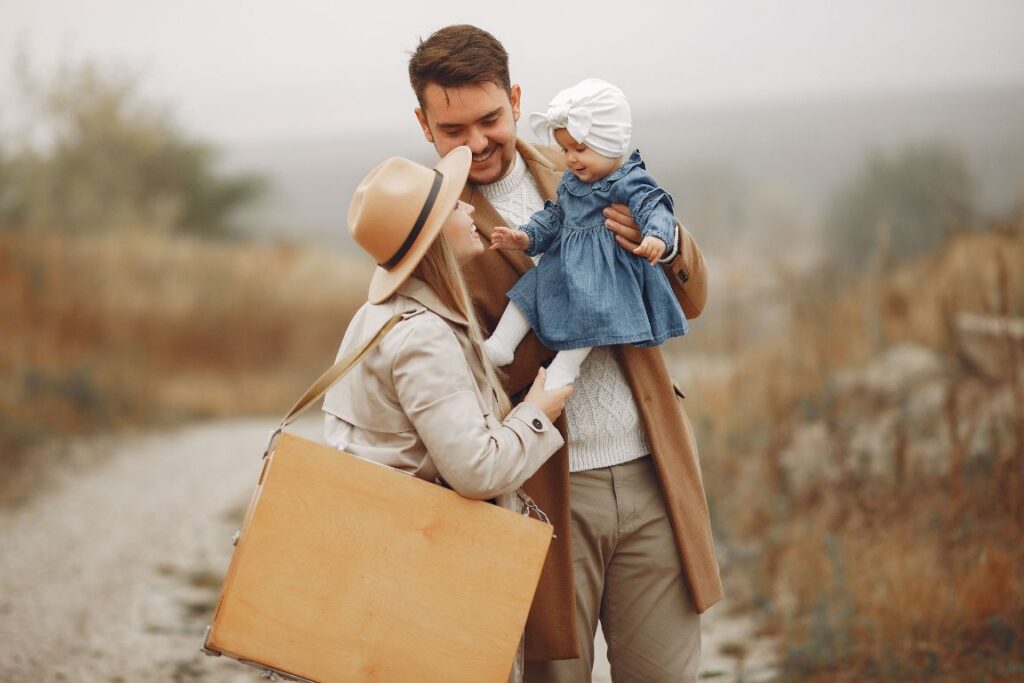
Traveling with a baby can make even a simple overnight trip feel like you’re moving house.
There are diapers, bottles, clothes, blankets, feeding supplies, toys, travel gear, and all the little things you normally reach for without thinking.
Then just when you think you’ve packed everything, you remember the wipes.
The good news is that you don’t need to bring your entire nursery.
A little planning can help you pack the things you’ll actually use while avoiding a suitcase full of unnecessary extras.
Whether you’re taking a road trip, visiting family, staying at a hotel, or flying somewhere new, this infant travel essentials checklist can help you get organized.
Table of Contents
Infant Travel Essentials Checklist
If you just need the quick version, start here.
Diapering
- Diapers
- Baby wipes
- Portable changing mat
- Diaper cream
- Disposable bags or wet bags
- Extra outfit for baby
Feeding
- Bottles
- Formula or expressed milk supplies as applicable
- Bibs
- Burp cloths
- Bottle brush
- Feeding utensils for older babies
- Baby food or snacks if needed
Clothing
- Everyday outfits
- Pajamas
- Socks
- Weather-appropriate layers
- Hat
- Extra clothes for unexpected messes
Travel Gear
- Car seat when needed
- Stroller
- Baby carrier
- Diaper bag
- Travel crib or other appropriate sleep setup if your accommodation doesn’t provide one
Comfort & Entertainment
- Favorite small toy
- Board book
- Pacifiers if used
- Familiar comfort item
- Teething toy if appropriate
Parent Bag
- Phone charger
- Travel documents
- Snacks
- Water
- Hand sanitizer
- Plastic bags
- Spare shirt for yourself
That covers the basics.
Now let’s look at what you may actually need in each category.
Diapers: Pack More Than You Think You’ll Need
Diapers are one of the hardest baby essentials to improvise without.
For short trips, think about how many diapers your baby normally uses in a day and add a few extras.
Travel can change routines.
You might experience:
- delays
- longer drives
- unexpected overnight stays
- more frequent changes
- difficulty finding your usual brand
You don’t necessarily need to pack a week’s worth if you’re traveling somewhere with stores nearby.
For longer trips, packing enough for the first day or two and buying more at your destination can save luggage space.
Keep Wipes Easy to Reach
Don’t bury the wipes at the bottom of your suitcase.
Keep a pack in your diaper bag where you can reach it quickly.
Baby wipes can also be useful for cleaning:
- hands
- high-chair surfaces
- small spills
- sticky toys
A travel-size pack is useful for outings, while a larger pack can stay with your main luggage.
Bring a Portable Changing Mat
A portable changing mat gives you a familiar surface when you’re away from home.
Look for one that folds small enough to fit inside your diaper bag.
Some diaper bags include a changing mat already, so check before packing another one.
Pack Bags for Dirty Clothes and Diapers
A few disposable bags or reusable wet bags can be surprisingly useful.
Use them for:
- dirty clothing
- wet bibs
- used diapers when a bin isn’t immediately available
- messy baby items
Keeping clean and dirty items separate makes the rest of your bag much easier to manage.
Pack More Baby Clothes Than Adult Clothes
Adults can usually wear the same outfit all day.
Babies sometimes have other plans.
Spit-up, food, diaper leaks, and unexpected messes can turn one outfit into three.
For short trips, packing at least one extra outfit per day is a practical starting point.
You might want additional backups for travel days.
Choose Simple Baby Outfits
Travel isn’t usually the best time for complicated clothing.
Pack pieces that are:
- easy to change
- comfortable
- easy to layer
- easy to wash
- suitable for the weather
Simple outfits also make diaper changes easier when you’re dealing with unfamiliar changing spaces.
Pack Layers
Indoor and outdoor temperatures can vary considerably while traveling.
Instead of packing only thick or thin clothes, bring layers you can add or remove.
Depending on the destination, that might include:
- lightweight cardigan
- sweatshirt
- jacket
- extra socks
- sun hat or warm hat
Check the forecast before leaving rather than packing for every possible season.
Don’t Forget Pajamas
Pajamas are easy to overlook because they aren’t usually sitting beside the daytime outfits you’re packing.
Bring enough for the trip plus a spare if luggage space allows.
A familiar bedtime outfit can also help maintain some of your usual evening routine away from home.
Pack Feeding Supplies Based on Your Routine
Your feeding bag will look different depending on your baby’s age and usual routine.
Instead of following a generic checklist, think through an ordinary day from morning to night.
What do you normally reach for?
That might include:
- bottles
- bottle nipples
- bibs
- burp cloths
- formula supplies
- expressed milk storage supplies
- feeding spoon
- bowl
- baby food
- snacks
- sippy cup
Pack around your baby’s actual routine rather than bringing feeding products you rarely use at home.
Bring Enough Bottles for the Journey
If you use bottles, think about when you’ll realistically be able to wash them.
For a long travel day, having several bottles may be easier than relying on constant cleaning.
Once you reach your accommodation, you can return to your usual washing routine.
A bottle brush and whatever basic cleaning supplies you normally use may be useful if they’re unlikely to be available where you’re staying.
Keep Burp Cloths Within Reach
Burp cloths are useful far beyond feeding.
They can help with:
- small spills
- spit-up
- wiping hands
- protecting clothing
Keep one or two in the diaper bag rather than putting them all in your suitcase.
Bring Bibs That Are Easy to Clean
If your baby is eating solids, travel-friendly bibs can make meals much easier.
Choose ones that:
- wipe clean
- dry quickly
- fold easily
You probably don’t need to pack your entire bib collection.
A few practical ones are usually enough.
Pack Familiar Baby Food and Snacks
For babies already eating solids, bringing familiar foods for the travel portion of the trip can make things simpler.
Depending on age and routine, this might include:
- pouches
- dry snacks
- small meals
- feeding spoon
Once you reach your destination, you may be able to buy additional food locally.
Choose the Right Stroller for the Trip
Your everyday stroller isn’t automatically the best travel stroller.
Think about your destination.
Will you be:
- navigating airports?
- walking long distances?
- using taxis?
- climbing stairs?
- dealing with uneven streets?
- folding the stroller frequently?
A large everyday stroller may be worth bringing if you’ll walk constantly.
A smaller stroller may be easier if you’ll repeatedly fold and carry it.
If you’re still deciding what works for your family, internally link this article to our How to Choose a Baby Stroller guide.
Consider a Baby Carrier
A baby carrier can be incredibly convenient during travel, particularly when pushing a stroller isn’t practical.
Parents may find one useful for:
- busy transport areas
- short walks
- situations where stairs are involved
- keeping hands free
If you already use a carrier regularly at home, bringing the same familiar one is usually easier than introducing a completely new setup during the trip.
Follow the carrier manufacturer’s instructions for fit and use.
Think About Your Baby’s Sleep Setup Before You Leave
Don’t wait until arrival to discover that your accommodation doesn’t have the setup you expected.
Before your trip, check what is available.
If you’re staying with relatives or at a hotel, ask in advance rather than assuming.
If you’re bringing your own travel setup, check:
- packed dimensions
- weight
- ease of setup
- whether it fits in your vehicle or luggage plan
Follow the product manufacturer’s instructions for assembly and use.
Bring Familiar Bedtime Items
Travel can disrupt a normal routine, so a few familiar bedtime items may help the new environment feel less strange.
Depending on what your baby normally uses, consider packing things such as:
- pajamas
- favorite bedtime book
- familiar sleep sack
- small routine-related item
You don’t need to recreate the entire nursery.
A few recognizable parts of your usual routine can be enough.
Pack Pacifiers in More Than One Place
If your baby uses a pacifier, don’t bring just one.
Pack backups.
And don’t keep all of them in the same suitcase.
You might put:
- one in the diaper bag
- one in your main luggage
- one spare in another easy-to-reach bag
Small baby items have a talent for disappearing at exactly the wrong time.
Bring a Few Small Toys
You don’t need a suitcase full of entertainment.
Choose a handful of compact favorites.
Good travel toys are generally:
- lightweight
- easy to hold
- easy to clean
- not made of dozens of separate pieces
You can rotate them rather than giving everything to your baby at once.
A familiar favorite plus one or two less-familiar items can provide plenty of variety.
Pack a Couple of Books
Board books travel well and can be used in several situations:
- waiting
- bedtime
- quiet time
- restaurants
- transport
Choose small books rather than packing the heaviest ones from the shelf.
Keep One Toy in Reserve
Here’s a simple travel trick:
Don’t give your baby every toy immediately.
Keep one item hidden until:
- the trip feels long
- you’re waiting somewhere
- your baby is getting restless
Something they haven’t seen for several hours can suddenly feel much more interesting.
Organize the Diaper Bag for the Journey
Your travel diaper bag should contain what you need during the journey, not everything needed for the whole vacation.
Think of it as your first-day survival bag.
A practical setup might include:
- diapers
- wipes
- changing mat
- two changes of baby clothes
- feeding supplies
- burp cloth
- pacifier
- small toy
- plastic or wet bag
- parent essentials
Everything else can remain in the main luggage.
Pack an Extra Shirt for Yourself
This one is easy to forget.
You remembered four baby outfits.
Then baby spits up all over you.
A lightweight spare shirt for the parent can take very little space and may save the rest of your travel day.
Use Packing Cubes or Small Bags
Keeping baby items grouped makes unpacking much easier.
For example:
Cube 1: Baby clothes
Cube 2: Pajamas and sleep items
Bag 3: Feeding supplies
Bag 4: Diaper supplies
Bag 5: Toys
Then you aren’t searching through an entire suitcase for one tiny pair of socks.
Separate Travel-Day Items From Destination Items
This is one of the easiest ways to avoid overpacking your diaper bag.
Ask:
Do I need this while traveling, or only once we arrive?
Travel-day items stay with you.
Destination items go into the suitcase.
That one distinction can dramatically reduce how much you’re carrying around.
Infant Travel Essentials for a Road Trip
Road trips give you more luggage flexibility, but don’t let that turn the car into a mobile nursery.
Keep the most important items accessible.
Consider keeping a separate road-trip bag containing:
- diapers
- wipes
- clothes
- feeding supplies
- burp cloths
- toys
- plastic bags
- parent snacks
Don’t put something you’ll need halfway through the drive underneath every suitcase in the trunk.
Infant Travel Essentials for Flying
When flying with a baby, accessibility becomes even more important.
Your carry-on or diaper bag should contain the supplies you’ll need through:
- airport arrival
- security
- waiting
- boarding
- flight time
- possible delays
- arrival
Don’t plan your bag around the scheduled flight duration alone.
Travel days often take significantly longer than the time spent in the air.
Also check your airline’s current baggage and baby-equipment policies before the trip, since rules can differ by airline and route.
What Should Go in Your Carry-On?
For a flight, prioritize anything you would struggle to replace immediately if your checked luggage were delayed.
That usually means:
- diapers
- wipes
- baby clothing
- feeding essentials
- necessary travel documents
- small comfort items
- parent essentials
Keep them with you rather than checking everything.
What Can You Buy at Your Destination?
You don’t have to transport every consumable from home.
Depending on your destination, you may be able to buy:
- diapers
- wipes
- snacks
- basic toiletries
- additional baby food
If you’re visiting somewhere unfamiliar, check availability before relying on this strategy.
For products where your baby uses a very specific brand or version, you may prefer to bring enough from home.
Things You Probably Don’t Need to Pack
Overpacking often happens because we prepare for every imaginable situation.
Depending on your trip, you may not need:
- huge numbers of toys
- entire packs of diapers for long trips when you can buy them locally
- bulky nursery decor
- multiple large blankets
- several pairs of baby shoes
- every feeding accessory you own
- duplicate gear with the same purpose
If you’re unsure, ask:
Will I realistically use this during this specific trip?
If the answer is probably not, leave it home.
Check What Your Accommodation Provides
Hotels, rentals, and relatives may already have things you would otherwise pack.
Ask about:
- baby sleep setup
- high chair
- laundry
- bathtub
- refrigerator
- kettle or kitchen facilities
- stroller access
- elevator
Knowing what’s waiting for you can eliminate unnecessary luggage.
Make a Baby Travel Checklist Before Packing
Don’t rely on memory.
Create your list a few days before leaving.
Then as you move through a normal day with your baby, notice what you use.
You might realize:
I forgot the bottle brush.
or:
We use that small bib every meal.
Add those things to the checklist.
Packing based on an actual day is much more reliable than trying to imagine every baby item at once.
Pack the Diaper Bag Last
Pack the main suitcase first.
Then pack the diaper bag based on what’s left and what you’ll need during transit.
This reduces accidental duplication while ensuring the essentials stay accessible.
Infant Travel Essentials by Category
Here’s an easy final checklist to save.
Diapering
- Diapers
- Wipes
- Changing mat
- Diaper cream if normally used
- Disposable bags or wet bag
Clothing
- Everyday outfits
- Extra outfits
- Pajamas
- Socks
- Layers
- Weather-appropriate hat
Feeding
- Bottles if used
- Feeding supplies
- Bibs
- Burp cloths
- Baby food/snacks as appropriate
- Feeding utensils
Gear
- Car seat when required
- Stroller
- Baby carrier
- Diaper bag
- Appropriate travel sleep setup if needed
Comfort
- Pacifiers
- Small toys
- Books
- Familiar routine item
Parent Essentials
- Travel documents
- Phone charger
- Water
- Snacks
- Spare shirt
- Plastic bags
Frequently Asked Questions
What are the most important infant travel essentials?
Start with the things your baby needs every day: diapers, wipes, clothing, feeding supplies, appropriate travel gear, and a few familiar comfort items. Pack those first before adding optional extras.
How many baby outfits should I pack for travel?
A useful starting point is at least one outfit per day plus extra changes for messy days and the journey itself. How many backups you need depends on trip length and whether you’ll have access to laundry.
How many diapers should I pack for a trip?
Think about how many your baby normally uses and add extras for the journey and potential delays. For longer trips, you may be able to bring enough for the first day or two and purchase additional diapers at your destination.
Should I bring a stroller and a baby carrier?
You can bring both if each serves a different purpose. A stroller may work well for long outings, while a familiar carrier can be useful in crowded or less stroller-friendly situations.
What should go in a baby’s carry-on bag?
Keep diapers, wipes, changes of clothes, feeding essentials, small comfort items, and anything you’ll need during the actual journey in the bag that stays with you.
How can I avoid overpacking for a baby?
Separate things into three groups: needed during travel, needed at the destination, and “just in case.” Pack the first two groups carefully and question most things in the third.
What baby items can I buy after arriving?
Depending on your destination, common consumables such as diapers, wipes, and basic baby supplies may be easy to buy. Check availability first if your baby relies on a particular product or brand.
Final Thoughts
Packing infant travel essentials doesn’t mean taking every baby product you own.
Start with your baby’s normal routine.
Think through diapering, feeding, clothing, sleep, transport, and comfort.
Then separate what you need during the journey from what you only need once you arrive.
A well-organized diaper bag, a few extra essentials, and a realistic packing list can make travel feel much more manageable.
You may still feel like you’re carrying considerably more than you did before having a baby.
But at least you’ll know why everything is in the bag.