
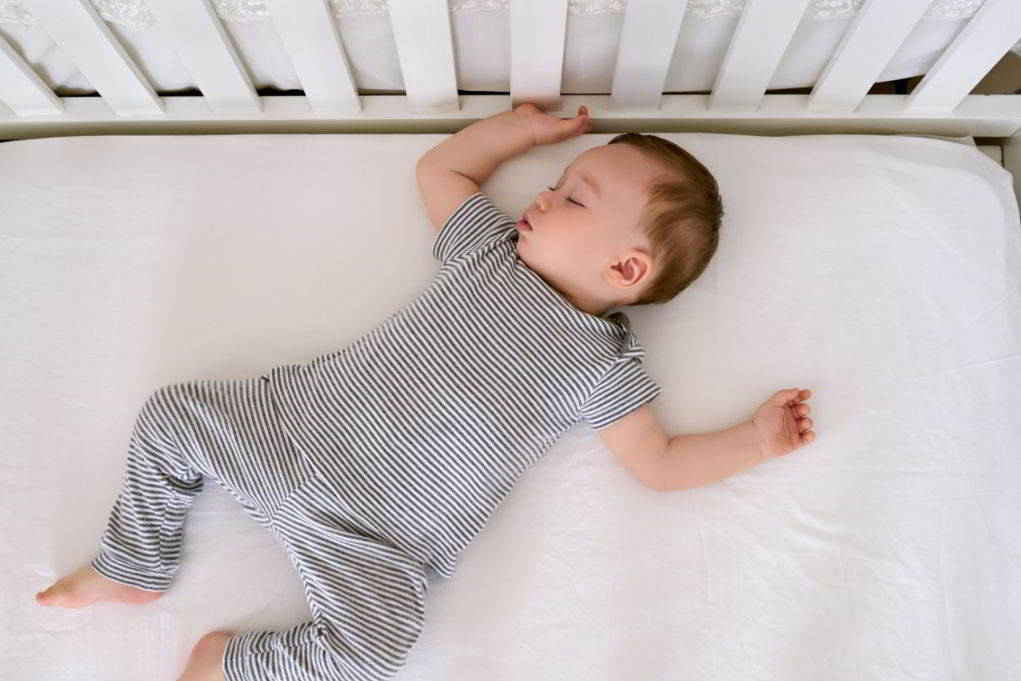
Watching your baby kick, twitch, wave their arms, turn their head, or suddenly jerk while sleeping can make a quiet night feel anything but peaceful.
Fortunately, movement during infant sleep is often normal.
Babies spend more time in active sleep than adults do. During this lighter stage of sleep, they may twitch, stretch, make facial expressions, move their eyes beneath closed eyelids, briefly cry, or breathe less regularly.
As babies grow, they also begin rolling and changing positions independently during sleep.
The important question is not simply, “Does my baby move a lot?” Instead, look at what the movements are like and whether your baby is breathing comfortably, maintaining their usual color, feeding normally, and behaving normally when awake.
Medical notice: This article provides general educational information. It does not diagnose seizures, sleep disorders, breathing problems, or other medical conditions. Contact your baby’s pediatrician when movements are unusual, repetitive, new, or concerning.
Why Do Babies Move So Much While Sleeping?
Infant sleep is different from adult sleep.
A baby moves through periods of active sleep and quieter sleep. During active sleep, the brain and nervous system remain highly active even though the baby is asleep.
You may notice:
- Arms moving suddenly
- Legs kicking
- Hands opening and closing
- Small twitches
- Facial expressions
- Smiling
- Frowning
- Sucking movements
- Brief cries
- Head turning
- Stretching
- Squirming
- Changes in breathing rhythm
- Eyes moving beneath closed eyelids
These movements often stop or become much less noticeable when the baby enters deeper, quieter sleep.
What Is Active Sleep?
Active sleep is similar to rapid eye movement, or REM, sleep in adults.
During this sleep stage, babies may appear surprisingly busy.
They can:
- Twitch their arms or legs
- Make sucking movements
- Grimace or smile
- Move their eyes
- Make small noises
- Briefly startle
- Breathe irregularly
- Move without fully waking
These movements usually do not mean that your baby is uncomfortable.
A baby may appear restless for several minutes and then become completely still as they enter a quieter sleep stage.
Is Twitching During Sleep Normal?
Brief twitching can occur during normal infant sleep.
You may notice a:
- Finger twitch
- Foot movement
- Brief leg kick
- Shoulder jerk
- Small movement around the mouth
- Short full-body startle
Occasional movements are generally less concerning when they:
- Happen only during sleep
- Are brief
- Stop independently
- Stop when the baby wakes
- Do not affect breathing
- Do not cause a color change
- Are not repeatedly occurring in the same pattern
- Are not followed by unusual behavior
A video can be useful to show the pediatrician when you are uncertain about a movement.
Do not delay urgent care in order to record it when your baby is having difficulty breathing, changing color, or becoming unresponsive.
Why Does My Baby Suddenly Jerk While Sleeping?
Young babies have a startle response known as the Moro reflex.
A baby may suddenly:
- Throw the arms outward
- Spread the fingers
- Straighten the legs
- Pull the arms back toward the body
- Briefly wake or cry
This reflex can be triggered by:
- A sudden sound
- Movement
- Being placed down
- A sensation of falling
- A change in position
The Moro reflex is strongest during early infancy and gradually disappears as the nervous system develops.
A baby who suddenly jerks once during sleep may simply have startled.
Repeated unusual jerking or movements that continue while the baby is awake should be discussed with a healthcare professional.
Why Does My Baby Kick Their Legs While Sleeping?
Leg kicking may occur during:
- Active sleep
- Stretching
- A brief awakening
- Normal developmental movement
- Gas or bowel activity
- Changing sleep position
Older babies may also lift their legs, roll their hips, or move around the crib as they practise new physical skills.
When the baby is comfortable and returns to sleep, occasional kicking usually does not require intervention.
Why Does My Baby Move Their Arms So Much?
Young babies do not have the same control over their arms that older children do.
During sleep you may see:
- Arm waving
- Hands touching the face
- Fingers opening
- Sudden arm extensions
- Rubbing the eyes
- Reaching movements
- Hands moving toward the mouth
These movements commonly become more coordinated as the nervous system matures.
Make sure the sleep area is clear so the baby can move without becoming caught against pillows, blankets, bumpers, toys, or other objects.
Why Does My Baby Squirm and Move Their Head?
Babies may move their head from side to side while:
- Settling to sleep
- Moving between sleep stages
- Trying to become comfortable
- Responding to sounds
- Practising movement
- Briefly waking
Older infants may also reposition their entire body.
Frequent head movement accompanied by persistent crying, ear pulling, fever, vomiting, feeding difficulty, or apparent pain should be discussed with the pediatrician.
My Baby Moves but Does Not Wake Up
That can be normal.
Movement does not necessarily mean that your baby is awake.
During active sleep, babies may:
- Stretch
- Twitch
- Cry briefly
- Make noises
- Open their eyes momentarily
- Kick
- Move their hands
- Change facial expressions
Before immediately picking up a comfortable baby after one small movement or sound, watch briefly to see whether they are actually waking.
Respond when your baby is hungry, uncomfortable, ill, distressed, or needs care.
Why Does My Baby Keep Changing Positions?
As babies develop stronger muscles, they begin learning to:
- Roll
- Turn
- Lift the head
- Push with the legs
- Rotate the body
- Move around the crib
These skills do not switch off during sleep.
A baby who can roll independently may change position several times during the night.
This can include:
- Rolling onto the side
- Rolling onto the stomach
- Returning to the back
- Turning around in the crib
- Moving toward one end of the mattress
This increased mobility is a normal part of development.
What Should I Do When My Baby Rolls Onto Their Stomach?
Always place your baby on their back at the beginning of every sleep.
When your baby can comfortably roll from back to stomach and from stomach to back independently, you generally do not need to repeatedly turn them over after they roll themselves.
Instead, make sure the sleep environment remains safe:
- Use a firm, flat mattress
- Use only a fitted sheet
- Keep pillows out
- Keep loose blankets out
- Keep toys and stuffed animals out
- Do not use crib bumpers
- Do not use wedges or positioners
- Do not swaddle a baby who is beginning to roll
- Keep the baby’s head and face uncovered
Do not use straps, rolled towels, cushions, or other devices to hold your baby in one position.
What If My Baby Can Roll Only One Way?
Continue placing your baby on their back for every sleep.
Babies often learn to roll in one direction before mastering the other direction.
Give your baby plenty of supervised tummy time and floor play while awake so they can practise:
- Head control
- Pushing up
- Reaching
- Rolling
- Moving in both directions
Do not practise these skills using sleep positioners in the crib.
When you are concerned that your baby repeatedly becomes stuck or seems unable to move comfortably, discuss development with the pediatrician.
Should You Swaddle a Baby Who Moves a Lot?
Swaddling may calm some young babies, but it is not appropriate once a baby begins showing signs of trying to roll.
Stop swaddling when your baby:
- Tries to roll
- Regularly turns onto the side
- Shows increasing body rotation
- Can roll independently
Do not wait for your baby to complete a full roll during sleep before stopping.
Once rolling begins, the baby needs the freedom to use their arms to reposition the body.
Use ordinary sleep clothing or an appropriately sized, unweighted sleep sack that allows free movement of the arms and hips.
Do not use:
- Weighted swaddles
- Weighted sleep sacks
- Weighted blankets
- Products that restrict a rolling baby’s arms
What If My Baby Hits the Crib Sides?
As babies become mobile, they may occasionally bump an arm, leg, or head against the crib.
It can be tempting to add padding, but crib bumpers are not recommended.
A bare crib remains safer than adding soft padding.
Do not add:
- Traditional bumpers
- Mesh bumpers
- Pillows
- Rolled blankets
- Cushions
- Foam padding
- Positioning devices
Minor contact with the crib sides is generally less dangerous than creating a soft object that could interfere with breathing.
Check that your crib:
- Meets current safety standards
- Is assembled correctly
- Has the correct mattress
- Has no broken or missing parts
- Has not been recalled
Can Babies Move Because They Are Too Hot or Cold?
Temperature discomfort may affect sleep, but movement alone cannot tell you whether your baby is too warm or cold.
To check warmth, feel the baby’s:
- Chest
- Back
- Abdomen
Hands and feet may naturally feel cooler.
Signs that a baby may be too warm include:
- Sweating
- Hot chest
- Flushed skin
- Damp hair
Dress the baby appropriately for the room rather than adding loose bedding.
Do not use blankets, heating pads, electric blankets, hot-water bottles, or heated sleep surfaces in an infant crib.
Can Gas Make a Baby Move During Sleep?
Digestive activity can make babies:
- Squirm
- Pull up their legs
- Grunt
- Stretch
- Pass gas
- Briefly wake
Young babies are still learning to coordinate the muscles used for digestion and bowel movements.
Gas is more likely to be the explanation when the baby otherwise:
- Feeds normally
- Has normal bowel movements
- Is gaining weight
- Settles afterward
- Shows no breathing problems
- Appears comfortable between episodes
Contact the pediatrician when abdominal symptoms occur with repeated vomiting, a swollen abdomen, blood in stool, poor feeding, fever, or persistent distress.
Can Reflux Make Babies Move in Their Sleep?
Some babies with reflux may:
- Squirm
- Swallow
- Cough
- Gag briefly
- Arch
- Wake after feeding
Occasional spit-up is common during infancy.
However, do not change the baby’s sleep position because of reflux.
Healthy infants, including babies with reflux, should generally sleep:
- On their backs
- Flat
- On a firm mattress
Do not:
- Raise one end of the crib
- Use a wedge
- Place a pillow beneath the baby
- Let the baby routinely sleep in a swing
- Use a sleep positioner
Contact your pediatrician when reflux is associated with poor growth, repeated choking, feeding refusal, breathing problems, blood, or frequent forceful vomiting.
Do Babies Move More When Learning New Skills?
They can.
Sleep may temporarily become more active while a baby is learning skills such as:
- Rolling
- Sitting
- Crawling
- Pulling to stand
You may notice your baby practising movements in the crib before falling asleep or after briefly waking.
For example, a baby who recently learned to roll may repeatedly roll from side to side.
Keep the crib safe and give the baby plenty of opportunities to practise new skills while awake.
Does Moving a Lot Mean My Baby Is Not Sleeping Well?
Not necessarily.
A baby can move frequently and still obtain normal restorative sleep.
Sleep quality is better assessed by the overall picture.
Consider whether your baby:
- Gets an age-appropriate amount of sleep
- Wakes alert
- Feeds well
- Plays and interacts normally
- Grows appropriately
- Is reasonably content during awake periods
Movement during active sleep does not automatically mean that sleep is poor.
Should I Try to Stop My Baby From Moving?
Usually, no.
Healthy movement during sleep does not need to be suppressed.
Do not use:
- Restraints
- Sleep positioners
- Tight blankets
- Weighted products
- Pillows around the body
- Rolled towels
- Devices designed to keep the baby still
The safer approach is to provide a clear sleep space that allows your baby to move naturally.
Could the Movements Be a Seizure?
Most sleep movements are not seizures.
However, repeated or unusual movements should be assessed when you are unsure.
Contact a healthcare professional promptly when movements:
- Occur repeatedly in the same rhythmic pattern
- Continue when the baby wakes
- Affect only one side repeatedly
- Include unusual stiffening
- Are accompanied by unusual eye movements
- Are followed by unusual sleepiness or behavior
- Represent a new pattern
- Occur in repeated clusters
Seek urgent medical help when unusual movement occurs with:
- Difficulty breathing
- Blue or gray coloring
- Loss of responsiveness
- A prolonged episode
- Failure to return to normal behavior afterward
Do not attempt to hold a baby’s limbs still during a suspected seizure, and do not put anything in the baby’s mouth.
Sleep Twitching Versus a Concerning Movement
Normal sleep movements are more likely to be:
- Brief
- Irregular
- Limited to sleep
- Different each time
- Followed by ordinary behavior
- Unaccompanied by breathing or color changes
A movement deserves medical assessment when it is:
- Repetitive
- Rhythmic
- Prolonged
- Increasing in frequency
- Occurring while awake
- Accompanied by stiffening
- Accompanied by abnormal breathing
- Associated with reduced responsiveness
Parents do not need to determine exactly what the movement is before asking for help.
What About Repetitive Rocking or Head Movement?
Some older babies repetitively:
- Rock their body
- Move the head from side to side
- Roll rhythmically
- Move their legs
These movements can occur while settling themselves to sleep.
Keep the crib safe and avoid adding padding.
Mention repetitive movement to the pediatrician when:
- It causes injury
- It also happens frequently during awake periods
- Development is concerning
- The baby seems distressed
- Sleep is significantly disrupted
- You notice loss of previously learned skills
- You are uncertain whether the movement is voluntary
Why Does My Baby Move More During the Second Half of the Night?
Sleep stages change throughout the night.
A baby may spend more time in lighter sleep near morning and therefore:
- Move more
- Make more noise
- Briefly open their eyes
- Change position
- Wake more easily
Early-morning hunger, light entering the room, temperature changes, and ordinary sleep patterns may also contribute.
Movement alone does not necessarily mean you need to change the baby’s schedule.
Should I Wake My Baby When They Move?
Usually not when your baby:
- Is breathing comfortably
- Has normal color
- Appears relaxed
- Remains asleep
- Settles independently
Give your baby a moment before intervening when the movement appears ordinary.
Respond when your baby:
- Is clearly awake and needs you
- Is hungry
- Has a dirty diaper
- Appears ill
- Is crying persistently
- Is in an unsafe position or environment
- Has breathing difficulty
- Shows an unusual movement
Should I Use a Baby Monitor?
A video monitor may help caregivers observe a sleeping baby without repeatedly entering the room.
However, a consumer monitor cannot diagnose:
- Seizures
- Sleep apnea
- Breathing disorders
- SIDS risk
- Neurological conditions
Consumer heart-rate or oxygen monitors may also produce false alarms or false reassurance.
Do not use a normal monitor reading to ignore visible signs that your baby is struggling to breathe or behaving unusually.
Safe sleep practices remain important whether or not you use a monitor.
Safe Sleep When Your Baby Is Very Active
An active sleeper needs more room to move safely, not more objects to keep them still.
For every nap and nighttime sleep:
- Place your baby on their back
- Use a firm, flat sleep surface
- Use a safety-approved crib, bassinet, portable crib, or play yard
- Use only a fitted sheet
- Keep loose blankets out
- Keep pillows out
- Keep toys out
- Do not use crib bumpers
- Do not use wedges or positioners
- Avoid weighted products
- Stop swaddling when rolling begins
- Keep the baby’s head and face uncovered
When your baby falls asleep in a swing, stroller, carrier, or car seat outside travel, move them to an appropriate firm, flat sleep surface as soon as reasonably possible.
When to Contact Your Pediatrician
Contact your baby’s healthcare professional when:
- Sleep movements suddenly change
- Twitching becomes frequent
- Movements are repetitive or rhythmic
- Movements also happen while awake
- One side of the body repeatedly moves differently
- Your baby frequently appears stiff
- Your baby regularly seems uncomfortable during sleep
- Sleep movement interferes with feeding
- Your baby has poor weight gain
- Your baby frequently wakes because of apparent pain
- Your baby snores loudly or regularly
- You notice repeated breathing pauses
- Your baby was born prematurely
- Your baby has a neurological, breathing, heart, or developmental condition
- You simply cannot tell whether what you are seeing is normal
A short video of the movement can sometimes help the pediatrician understand what is happening.
When to Seek Urgent Medical Help
Seek urgent or emergency medical help when movement occurs with:
- Blue, gray, or unusually pale coloring
- Significant breathing difficulty
- Skin pulling inward around the ribs
- A prolonged breathing pause
- Loss of responsiveness
- Limpness
- Difficulty waking
- A prolonged or repeated episode of unusual jerking
- Severe choking
- A seizure-like episode
- A baby who does not return to their usual behavior afterward
Young babies can become ill quickly. When something looks seriously wrong, seek medical care rather than waiting to see whether it happens again.
Frequently Asked Questions
Is it normal for babies to move constantly while sleeping?
Some babies are much more active sleepers than others. Twitching, kicking, stretching, squirming, and brief movements can occur during active sleep.
Why does my newborn kick and wave their arms during sleep?
Young babies spend substantial time in active sleep and have immature motor control. The startle reflex can also cause sudden arm and leg movements.
Why does my baby jerk suddenly while sleeping?
A brief jerk can occur during active sleep or because of the startle reflex. Repetitive, prolonged, or unusual jerking should be discussed with a pediatrician.
Is twitching during sleep a seizure?
Usually not. Brief irregular twitching limited to sleep can occur normally. Repeated rhythmic movement, stiffening, unusual eye movements, or reduced responsiveness need medical assessment.
Why does my baby roll around all night?
Once babies learn to roll and become more mobile, they may frequently change position during sleep.
Always put the baby down on their back. When they can comfortably roll both ways independently, you generally do not need to keep repositioning them.
Should I use a bumper because my baby moves around the crib?
No. Keep the crib bare. Bumpers and other padding can create sleep hazards.
Can I swaddle an active sleeper?
Swaddling may be used only before a baby begins trying to roll. Stop as soon as rolling attempts appear.
Are weighted sleep sacks good for restless babies?
No. Weighted sleep products are not recommended for infants.
Should I hold my baby’s arms down when they twitch?
No. Do not restrain normal sleep movement. During a suspected seizure, do not attempt to hold the limbs still.
Does moving a lot mean my baby is overtired?
Not necessarily. Active movement can occur during normal sleep regardless of whether a baby is overtired.
Why does my baby lift both legs in the air while sleeping?
Babies may lift or kick their legs while stretching, passing gas, moving through active sleep, or changing position.
Why does my baby rub their face while sleeping?
Babies may touch or rub the face while transitioning between sleep stages or briefly waking. Keep the sleep space free of loose objects that could cover the face.
Can reflux make a baby restless during sleep?
It can contribute to swallowing, squirming, or brief waking in some babies. Do not incline the crib or change to stomach sleeping because of reflux.
When should I worry about sleep movement?
Contact a pediatrician when movements are new, repetitive, prolonged, occur while awake, or come with breathing problems, color changes, stiffening, feeding changes, or reduced responsiveness.
The Bottom Line
Babies commonly move during sleep.
Normal sleep movements may include:
- Twitching
- Kicking
- Arm movements
- Stretching
- Squirming
- Head turning
- Brief startling
- Rolling as mobility develops
These movements are generally less concerning when your baby is breathing comfortably, maintaining their usual color, feeding normally, developing appropriately, and behaving normally when awake.
Rather than trying to stop movement:
- Provide a firm, flat sleep surface
- Keep the crib completely clear
- Place your baby on their back to begin every sleep
- Stop swaddling when rolling attempts begin
- Avoid weighted sleep products
- Let a baby who can roll both directions reposition independently
- Record unusual movements for the pediatrician when appropriate
Seek medical attention when movements become repetitive, prolonged, occur while awake, or are associated with breathing difficulty, color change, unusual stiffness, or reduced responsiveness.
Sources
- American Academy of Pediatrics: Stages of Newborn Sleep
- American Academy of Pediatrics: How to Keep Your Sleeping Baby Safe
- American Academy of Pediatrics: Safe Sleep and Reducing Sleep-Related Risks
- American Academy of Pediatrics: Swaddling Safety
- American Academy of Pediatrics: Safe Sleep for Babies With Reflux
- MedlinePlus: Seizures