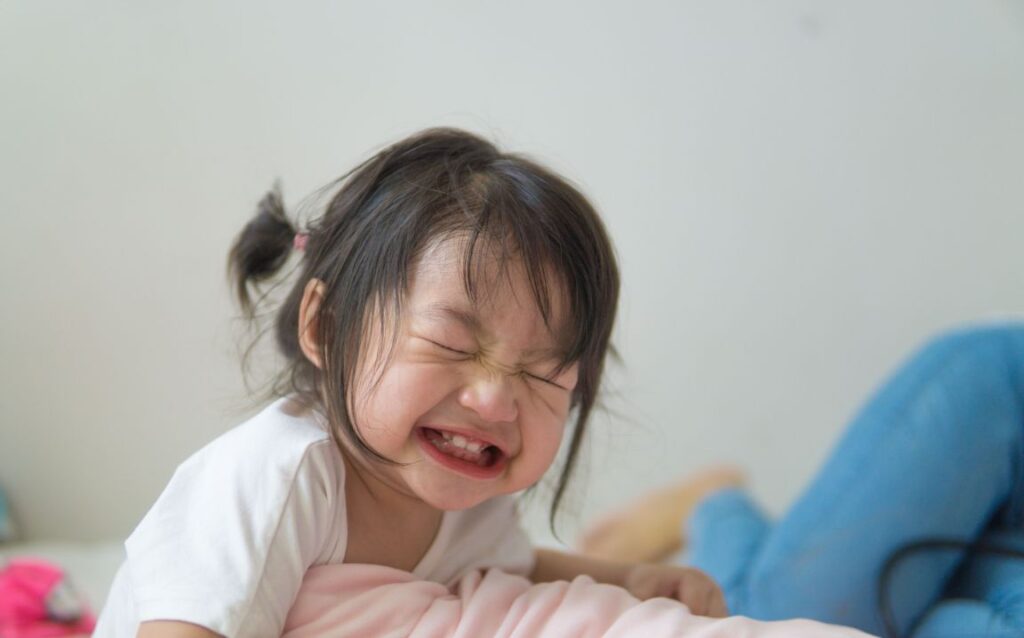
If you have spent any time with a toddler or preschooler, you already know that their sense of humour is a very specific thing. They want the absurd. They want repetition. They want to be the one who delivers the punchline even if they do not entirely understand it yet. And they will ask you to say it again, and again, and again, with the same delighted laugh every single time.
These jokes are written for that audience. They are simple, they are silly, they land at the right developmental level for children aged two to six, and several of them are genuinely funny for adults too, which matters more than most joke lists admit.
Table of Contents
Why Jokes Are Good for Toddlers and Young Children
Before the jokes, a quick note on why this is worth doing at all.
Jokes teach children that language can be playful. The structure of a joke, a setup that creates an expectation and a punchline that subverts it, is an early exercise in abstract thinking. Understanding why something is funny requires understanding what was expected and how the answer differed from that expectation. That is not nothing developmentally.
Jokes also give children a social script they can use. Knowing a joke gives a child something to offer in a social situation. Many children who are shy in groups light up when they have a joke to share, because the structure gives them a clear role to play.
And honestly, laughing together is one of the most straightforward ways to connect with a young child. Even bad jokes land when the relationship is right.
Animal Jokes for Toddlers
Animals are the bread and butter of toddler humour. Every child has a favourite animal, and a joke about that animal is automatically relevant.
- Why do cows wear bells? Because their horns do not work!
- What do you call a sleeping dinosaur? A dino-snore!
- Why did the duck cross the road? To prove he was not a chicken!
- What do you call a fish without eyes? A fsh!
- Why do elephants never use computers? Because they are afraid of the mouse!
- What do you call a lazy kangaroo? A pouch potato!
- What do you get when you cross a snowman and a dog? Frostbite!
- Why did the cat sit on the computer? To keep an eye on the mouse!
- What do you call a bear with no teeth? A gummy bear!
- Why do sharks swim in saltwater? Because pepper water makes them sneeze!
- What do you call an alligator in a vest? An investigator!
- Why did the elephant bring a suitcase to the jungle? Because it wanted to pack its trunk!
- What do you call a cow in an earthquake? A milkshake!
- Why do birds fly south for the winter? Because it is too far to walk!
- What is a frog’s favourite drink? Croak-a-Cola!
- What do you call a dog magician? A labracadabrador!
- Why did the lion eat the tightrope walker? It wanted a well-balanced meal!
- What do you call a sleeping bull? A bulldozer!
Food Jokes for Toddlers
Food is the second great subject of toddler comedy. These land particularly well with children who are enthusiastic eaters.
- Why did the banana go to the doctor? Because it was not peeling well!
- What do you call cheese that is not yours? Nacho cheese!
- Why did the orange stop rolling down the hill? Because it ran out of juice!
- What did the ocean say to the beach? Nothing, it just waved!
- Why did the tomato turn red? Because it saw the salad dressing!
- What do elves make their sandwiches with? Shortbread!
- Why did the cookie go to the doctor? Because it was feeling crummy!
- What is a scarecrow’s favourite fruit? Straw-berries!
- Why did the jelly roll? Because it saw the apple turnover!
- What do you call a sad strawberry? A blueberry!
- What did the baby corn say to the mama corn? Where is popcorn?
- Why do potatoes make good detectives? Because they keep their eyes peeled!
- What did one plate say to the other plate? Dinner is on me!
- Why did the student eat his homework? Because the teacher told him it was a piece of cake!
Knock Knock Jokes for Toddlers
Knock knock jokes are a toddler classic for a reason. The structure is completely learnable, children can deliver the setup themselves, and the format gives everyone a role to play in the joke.
- Knock knock. Who is there? Cow says. Cow says who? No, cow says MOO!
- Knock knock. Who is there? Lettuce. Lettuce who? Lettuce in, it is cold out here!
- Knock knock. Who is there? Interrupting cow. Interrupting cow wh– MOO!
- Knock knock. Who is there? Banana. Banana who? Knock knock. Who is there? Banana. Banana who? Knock knock. Who is there? Orange. Orange who? Orange you glad I did not say banana?
- Knock knock. Who is there? Boo. Boo who? Please do not cry, it is only a joke!
- Knock knock. Who is there? Olive. Olive who? Olive you and I miss you!
- Knock knock. Who is there? Ice cream. Ice cream who? Ice cream if you do not let me in!
- Knock knock. Who is there? Woo. Woo who? Do not get too excited, it is just a joke!
- Knock knock. Who is there? Atch. Atch who? Bless you!
- Knock knock. Who is there? Nana. Nana who? Nana your business!
Silly Jokes for Preschoolers and Young Children
These land with the three-to-six age group, who are old enough to follow a slightly more complex setup.
- What did one wall say to the other wall? I will meet you at the corner!
- Why can you not give Elsa a balloon? Because she will let it go!
- What do you call a boomerang that does not come back? A stick!
- What is the difference between a piano and a fish? You can tune a piano but you cannot tuna fish!
- Why did the bicycle fall over? Because it was two-tired!
- What do you call a sleeping T-Rex? A dino-snore!
- What do you call a snowman in summer? A puddle!
- Why did the golfer bring two pairs of trousers? In case he got a hole in one!
- What has four wheels and flies? A rubbish truck!
- What did zero say to eight? Nice belt!
- Why can you not tell a joke to an egg? Because it might crack up!
- What did one eye say to the other eye? Between us, something smells!
- Why did the scarecrow win an award? Because he was outstanding in his field!
- What do you call a fairy that does not wash? Stinkerbell!
- Why did the maths book look so worried? Because it had too many problems!
- What do you call a magic dog? A labracadabrador!
- What is brown and sticky? A stick!
Jokes About School and Everyday Life
Once children start nursery or preschool, jokes about school and daily routines land particularly well because they can relate to them directly.
- Why did the teacher wear sunglasses? Because her students were so bright!
- What do you call a teacher with no fingers? Mr Pointless!
- Why did the student eat his homework? Because the teacher said it was a piece of cake!
- What is a computer’s favourite snack? Microchips!
- Why did the clock go to the headteacher’s office? Because it was always ticking!
- What do librarians take with them when they go fishing? Bookworms!
Superhero and Character Jokes (For the Marvel and Disney Crowd)
- Why does Spider-Man never use Google? Because he always finds things on the web!
- What do you call Batman when he skips church? Christian Bale!
- Why did Cinderella get kicked off the football team? She kept running away from the ball!
- What do you call an Avenger who goes to the toilet a lot? Wee-Man!
- Why did Elsa fail her driving test? She drove into a wall and could not stop!
Tips for Telling Jokes With Toddlers
Timing matters more than content. A joke told when a toddler is tired, hungry, or already upset will land nowhere. The same joke told during a happy mealtime or a long car journey will get a laugh every time.
Let them tell it back to you. After you tell a joke, hand it to them. “Do you want to tell it to Daddy?” Most children will immediately want to repeat it. They will get the punchline slightly wrong, you will laugh anyway, and they will consider this an enormous success.
Do not explain the joke. Ever. If it does not land, move on. Explaining humour is its own special kind of unfunny.
Learn a few by heart. The best joke is the one you can produce on demand, without a phone. Three or four short ones stored in memory are infinitely more useful than a list you have to scroll through.
The more they hear a joke, the funnier it gets. This is counterintuitive for adults but completely true for toddlers and preschoolers. Familiarity increases the laugh. Do not be surprised when they ask for the same one five times.
How to Encourage Your Child to Make Up Their Own Jokes
Making up jokes is genuinely difficult, even for adults. But children do not know that, and their attempts, however surreal, are often genuinely funnier than the originals.
Start by giving them the structure. “Why did the…?” and let them fill in the blank with any animal and any action. Whatever they say becomes the setup. Then ask “And what happened?” Whatever they say becomes the punchline. Laugh regardless of whether it makes sense. The logic of jokes comes later. The joy of making someone laugh comes first.
Some children between four and six start producing genuinely funny jokes through this method. The ones who do tend to develop into natural storytellers.