
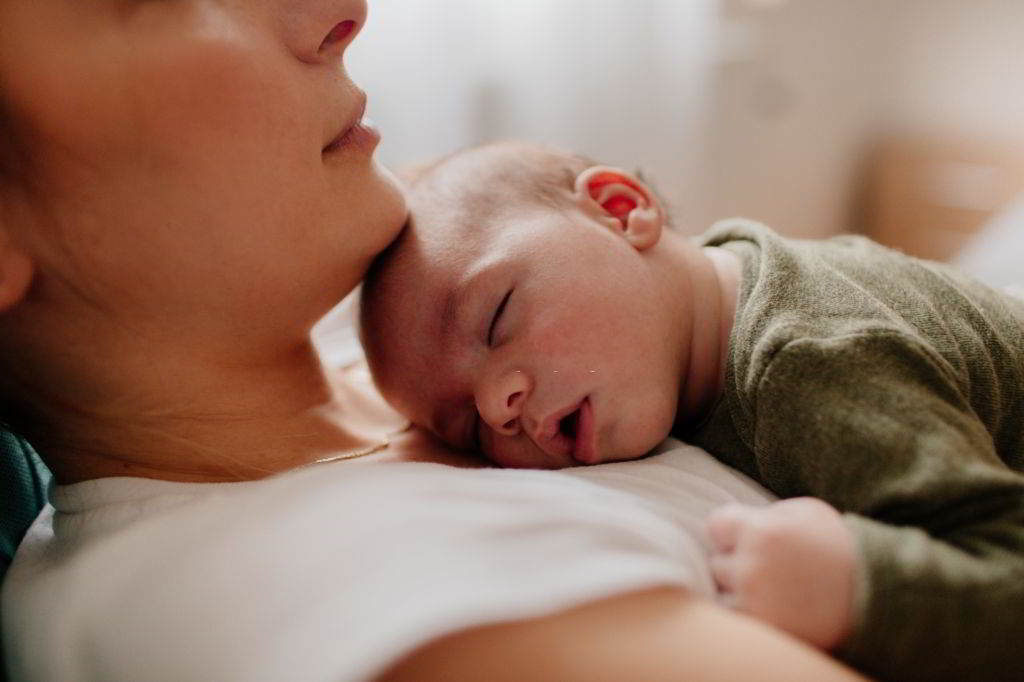
Babies can be surprisingly noisy while they sleep. A newborn may grunt, squeak, snort, whimper, sigh, breathe rapidly for a few moments, or briefly cry without fully waking.
Many of these sounds occur because newborn sleep is different from adult sleep. Babies spend a large portion of their sleep in an active stage during which they may move, make facial expressions, and breathe less regularly.
Occasional sounds are usually less concerning when your baby:
- Has normal skin and lip color
- Appears comfortable
- Is not struggling to breathe
- Feeds normally
- Wakes normally
- Is growing as expected
- Returns to quiet breathing without assistance
The sound itself is only part of the picture. Repeated grunting with every breath, visible effort, prolonged pauses, blue or gray coloring, poor feeding, or difficulty waking require prompt medical attention.
Medical notice: This article provides general educational information. It does not replace advice or assessment from a pediatrician, emergency service, or another qualified healthcare professional.
Why Do Babies Make So Much Noise While Sleeping?
A newborn’s nervous system, breathing pattern, digestive system, and sleep cycles are still developing.
Babies also have:
- Smaller nasal passages
- Narrower airways
- More active sleep than adults
- Less predictable breathing rhythms
- Frequent digestion and bowel activity
- Limited ability to clear nasal mucus
- Developing reflexes
A small amount of mucus that an adult would barely notice can make a baby sound congested. Movement during active sleep can also produce grunts, squeaks, sighs, and brief cries.
As the baby grows, sleep and breathing usually become quieter and more regular.
What Is Active Sleep?
Active sleep is similar to rapid eye movement, or REM, sleep in adults.
During active sleep, a baby may:
- Twitch the arms or legs
- Make sucking movements
- Smile or frown
- Move the eyes beneath closed eyelids
- Make brief crying sounds
- Grunt or squeak
- Breathe irregularly
- Startle
- Momentarily open the eyes
- Appear restless without waking
These movements do not necessarily mean that your baby is uncomfortable or having a bad dream.
Babies may move between active and quiet sleep several times. Waiting briefly before picking up a baby who makes one short sound can help you determine whether the baby is waking or simply moving through a sleep stage.
Respond immediately when your baby appears distressed, needs feeding, has breathing difficulty, or shows another concerning sign.
Common Sleep Noises That May Be Normal
Brief grunts
An occasional grunt may happen during active sleep, stretching, or digestion.
A brief isolated grunt is different from grunting with every breath. Rhythmic grunting during breathing can be a sign that a baby is working hard to move air and needs urgent assessment.
Watch your baby’s chest and abdomen rather than judging only the sound.
Squeaks and small cries
Babies may squeak, whimper, or cry briefly during active sleep and then become quiet again.
A single short cry does not always mean that the baby is awake. Check whether the baby’s eyes remain closed and whether they settle without assistance.
Persistent crying, a weak or unusual cry, or crying accompanied by breathing difficulty, fever, poor feeding, or reduced responsiveness should be assessed.
Snorting
Newborns breathe mainly through their noses. Narrow nasal passages can create snorting or congested sounds, especially when a small amount of mucus is present.
The sound may become more noticeable:
- After feeding
- During a mild cold
- In dry air
- When the baby is lying down
- After crying
- When milk or saliva collects near the back of the throat
Snorting is less concerning when breathing otherwise appears easy and feeding remains normal.
Gurgling
Saliva, milk, and normal secretions can create occasional gurgling sounds.
A baby may also spit up small amounts after feeding. Occasional spitting up is common during infancy.
Contact the pediatrician when gurgling occurs with:
- Repeated choking
- Difficulty feeding
- Coughing through most feeds
- Poor weight gain
- Breathing trouble
- Blue or gray coloring
- Repeated forceful vomiting
Hiccups
Hiccups are common in babies and may happen while the baby is awake or asleep.
They usually stop independently and do not require treatment.
Do not attempt to stop hiccups by frightening the baby, giving water, placing objects in the mouth, or using an herbal remedy.
Sighing
Babies may take occasional deeper breaths or sigh during sleep.
An isolated sigh followed by ordinary breathing is usually different from repeated gasping, labored breathing, or long breathing pauses.
Brief nasal whistles
A small amount of dried mucus can produce a whistling sound in the nose.
When your baby has mild nasal congestion, your pediatrician may recommend plain saline drops and gentle nasal suction. Use products designed for infants and follow professional guidance.
Do not insert cotton swabs, fingers, or another object deep into the nose.
What Is Periodic Breathing?
Periodic breathing is a pattern that can occur in young babies.
A baby may:
- Breathe normally.
- Pause for several seconds.
- Take several faster breaths.
- Return to a regular pattern.
Brief pauses of approximately five to ten seconds can occur during active sleep. The baby should remain comfortable, and the skin, lips, and tongue should keep their usual color.
Periodic breathing generally becomes less common as the baby matures and is usually outgrown by around six months.
It is different from a prolonged breathing pause or an episode involving:
- Blue, gray, or very pale coloring
- Limpness
- Difficulty waking
- Gasping
- Choking
- Visible breathing effort
- A pause lasting longer than approximately 20 seconds
Seek emergency help when one of these signs occurs.
How Can You Tell Whether a Baby Is Struggling to Breathe?
Do not judge breathing difficulty from noise alone. Look at the baby’s entire body.
Signs of increased breathing effort include:
- Skin pulling inward between the ribs
- Skin sucking in below the rib cage
- Pulling at the base of the neck
- Nostrils widening with each breath
- Head bobbing
- Belly moving forcefully
- Grunting with every breath
- Persistent rapid breathing
- Difficulty feeding because of breathing
- Sweating during feeds
- Pauses accompanied by color change
- Blue, gray, unusually pale, or blotchy coloring
- Unusual sleepiness or difficulty waking
Breathing trouble can worsen quickly in young babies. Seek urgent medical care rather than waiting for the sound to disappear.
What Is Stridor?
Stridor is a repetitive, harsh, or high-pitched sound that usually occurs as a baby breathes in.
It can indicate that air is moving through a narrowed upper airway.
One common cause of stridor in babies is laryngomalacia. This occurs when soft tissue near the voice box moves inward during breathing.
Laryngomalacia is often mild and improves as the baby grows, but a baby with persistent stridor should be examined by a pediatrician.
Arrange medical assessment when noisy breathing occurs with:
- Feeding difficulty
- Gasping or choking during feeds
- Frequent pauses in breathing
- Skin pulling in around the ribs or neck
- Poor weight gain
- Significant reflux symptoms
- Persistent high-pitched breathing while resting
Seek emergency help when stridor is accompanied by severe breathing difficulty, color change, reduced responsiveness, or sudden onset after possible choking.
What Is Wheezing?
Wheezing is commonly described as a musical or whistling sound, often heard while breathing out.
It may occur with:
- Bronchiolitis
- Respiratory syncytial virus
- Another viral infection
- Airway irritation
- Other breathing conditions
A blocked nose can also produce a whistle that parents may mistake for wheezing.
Contact your baby’s healthcare professional when you hear new wheezing, particularly when the baby also has:
- A cough
- Fever
- Fast breathing
- Feeding difficulty
- Fewer wet diapers
- Visible breathing effort
- Unusual tiredness
- Symptoms that are getting worse
Is Snoring Normal in Babies?
An occasional soft snore can occur when a baby has mild congestion or is sleeping in a particular position.
Frequent, loud, or persistent snoring should be discussed with a pediatrician, particularly when it occurs with:
- Repeated pauses
- Gasping
- Choking
- Restless sleep
- Breathing through the mouth
- Poor feeding
- Poor weight gain
- Unusual daytime sleepiness
- Difficulty waking
- Visible breathing effort
Persistent snoring and repeated breathing interruptions can be associated with sleep-related breathing problems.
A recording may help the pediatrician understand the sound, but it should never delay urgent care.
Why Does My Baby Sound Congested Only While Sleeping?
Mild nasal congestion may sound louder when a baby lies down because mucus and normal secretions shift toward the back of the nose and throat.
The room may also be quieter, making ordinary breathing sounds easier to notice.
Helpful steps may include:
- Using plain infant saline when recommended
- Gently suctioning visible mucus
- Feeding smaller amounts more frequently when congestion affects feeding
- Keeping the baby away from cigarette smoke and vaping aerosols
- Maintaining comfortable room humidity
- Holding the baby upright while awake after feeds
Always return the baby to a firm, flat sleep surface for sleep.
Do not:
- Raise the crib mattress
- Add a wedge
- Let the baby routinely sleep in a swing
- Place a pillow beneath the baby
- Use a sleep positioner
- Allow routine stomach sleeping for congestion
Inclined and soft sleep surfaces are not considered safe treatments for noisy breathing or congestion.
Can Reflux Cause Sleep Noises?
Babies may swallow, cough, gag briefly, or make wet-sounding noises when milk comes back into the esophagus or mouth.
Occasional reflux is common during infancy.
Contact the pediatrician when reflux-like symptoms involve:
- Repeated choking
- Breathing difficulty
- Poor weight gain
- Refusing feeds
- Significant pain
- Blood in vomit
- Green vomit
- Repeated forceful vomiting
- Fewer wet diapers
- Persistent coughing or wheezing
Do not incline the baby’s sleep surface to treat reflux. Babies should generally sleep flat on their backs unless a qualified specialist has provided a different plan for a specific medical condition.
Do Sleep Noises Mean the Baby Is Dreaming?
It is difficult to know exactly what a young baby experiences during sleep.
Movements, facial expressions, small cries, and smiles commonly happen during active sleep. These behaviors do not prove that the baby is having a pleasant or frightening dream.
There is usually no need to wake a comfortable baby because they briefly smile, frown, twitch, or make a small cry.
Are Sleep Twitches Normal?
Brief twitches or jerking movements can occur during active sleep.
Newborns may also startle suddenly because of the Moro reflex. The arms may move outward and then return toward the body.
Twitching is generally less concerning when it:
- Happens only during sleep
- Stops when the baby wakes
- Is brief
- Does not affect breathing or color
- Does not occur in repeated clusters
- Is not accompanied by reduced responsiveness
Record a short video and contact the pediatrician when movements are repetitive, unusual, occur while the baby is awake, affect only one side repeatedly, or are accompanied by eye deviation, stiffening, breathing changes, or difficulty responding.
Seek urgent care for a suspected seizure or a baby who is not recovering normally afterward.
Should You Wake a Noisy Sleeping Baby?
Not necessarily.
When your baby makes one brief sound but remains comfortable, watch for a moment before intervening. The baby may be transitioning between sleep stages and may settle independently.
Wake or respond to the baby when:
- It is time for a medically necessary feed
- The baby is hungry
- The baby needs changing
- Breathing appears difficult
- The baby feels unusually hot or cold
- The baby has vomited
- The baby seems distressed
- Color changes
- You cannot tell whether the baby is breathing normally
- The baby is unusually difficult to wake
Follow individual feeding instructions when your baby was born early, has jaundice, is not gaining weight adequately, or has another medical condition.
How to Observe Your Baby’s Breathing
When you are concerned:
- Turn on enough light to see the baby clearly.
- Look at the chest and abdomen.
- Check whether the skin is pulling inward around the ribs or neck.
- Look at the lips, tongue, and face for color changes.
- Listen for grunting with every breath, wheezing, or high-pitched stridor.
- Check whether the baby wakes and responds normally.
- Consider whether feeding and wet diapers have changed.
Do not shake the baby or place your face so close that you block airflow.
When you believe the baby has stopped breathing or is experiencing a medical emergency, contact emergency services immediately and follow their instructions.
Can You Record the Sound for the Pediatrician?
Yes. A short video or audio recording may help when the noise is intermittent and does not occur during the appointment.
Try to include:
- The sound
- The baby’s face and color
- Movement of the chest and abdomen
- Whether the ribs pull inward
- Whether the baby is asleep or awake
- Whether the sound occurs before or after feeding
Do not delay emergency care while trying to create a recording.
A recording cannot replace a physical examination when breathing difficulty is present.
Safe Sleep for a Noisy Baby
Noisy breathing does not change safe-sleep recommendations.
For every sleep:
- Place the baby on their back
- Use a firm, flat, level sleep surface
- Use a safety-approved crib, bassinet, portable crib, or play yard
- Use only a fitted sheet
- Keep pillows, blankets, toys, bumpers, and positioners out
- Avoid inclined sleepers
- Keep the baby’s face and head uncovered
- Avoid overheating
- Use an appropriately sized, unweighted sleep sack when needed
- Move a sleeping baby out of a sitting device when travel ends
Do not place a baby on the stomach or side to make breathing sound quieter.
A quieter sound does not mean the position is safer.
Should You Use a Breathing or Oxygen Monitor?
A consumer monitor may alert for movement, pulse, or oxygen readings, but it cannot diagnose the cause of noisy breathing.
Home monitors may also produce false alarms or false reassurance.
Do not use a consumer monitor to decide that a baby with breathing difficulty is safe to remain at home.
A monitor does not replace:
- Safe-sleep practices
- Direct observation
- Pediatric care
- Emergency assessment
- A medically prescribed monitor when one is genuinely needed
Contact the pediatrician when you believe monitoring may be medically necessary.
When to Contact the Pediatrician
Arrange medical advice when:
- Noisy breathing is persistent
- The sound also occurs while the baby is awake
- Your baby frequently snores
- You hear repeated wheezing
- You hear a high-pitched sound while breathing in
- Congestion affects feeding
- The baby coughs or chokes during feeds
- Feeding takes much longer than usual
- Weight gain is a concern
- The baby has fewer wet diapers
- Sleep behavior changes suddenly
- Your baby was born prematurely
- Your baby has a heart, lung, airway, or neurological condition
- You remain worried even without an obvious emergency sign
For a newborn, contact the healthcare professional promptly when the baby begins looking or acting different from usual.
When Is Urgent or Emergency Care Needed?
Seek urgent or emergency help when your baby:
- Grunts with every breath
- Is breathing very rapidly and appears distressed
- Has skin pulling inward around the ribs or neck
- Has flaring nostrils or head bobbing
- Has a breathing pause lasting longer than approximately 20 seconds
- Has repeated pauses accompanied by gasping
- Has blue, gray, very pale, or blotchy lips or skin
- Is floppy
- Is difficult or impossible to wake
- Cannot feed because of breathing difficulty
- Has a weak suck or suddenly feeds much less
- Has severe choking
- Has sudden stridor after possible inhalation of an object
- Appears seriously unwell
- Has a seizure
- Has severe breathing difficulty
A baby younger than three months with a temperature of 38°C or 100.4°F or higher needs prompt medical assessment.
Do not give fever medicine to a young baby before receiving medical advice unless a qualified healthcare professional has already instructed you to do so.
Frequently Asked Questions
Is it normal for a newborn to grunt while sleeping?
Occasional brief grunts can occur during active sleep or digestion. Grunting with every breath, especially with chest pulling, nasal flaring, fast breathing, or color change, is not something to ignore.
Why does my baby sound like an animal while sleeping?
Narrow nasal passages, active sleep, saliva, mucus, and developing breathing patterns can produce squeaks, snorts, whistles, and other unexpected sounds.
Is irregular breathing normal in newborns?
Brief irregular breathing and short pauses can occur during active sleep. The baby should remain comfortable and maintain normal color. Prolonged pauses or color changes require emergency attention.
How long is a normal breathing pause?
Periodic breathing may include pauses lasting approximately five to ten seconds. Seek emergency help for a pause longer than about 20 seconds or any pause associated with color change, limpness, or difficulty waking.
Why does my baby breathe quickly after a pause?
With periodic breathing, a young baby may briefly pause and then take several faster catch-up breaths before returning to a regular pattern.
Why does my baby grunt and turn red?
Babies may grunt or briefly turn red while passing gas or stool. However, blue, gray, pale, or blotchy coloring—especially with breathing changes—is concerning and needs urgent care.
Is wheezing during sleep normal?
New wheezing should be discussed with a healthcare professional, particularly when it occurs with coughing, fever, rapid breathing, feeding difficulty, or visible breathing effort.
Is a high-pitched squeak normal?
A repeated high-pitched sound while breathing in may be stridor. It should be assessed by a pediatrician, especially when it occurs during rest or affects feeding or growth.
Can congestion make a baby noisy at night?
Yes. Mild mucus can sound loud because a baby’s nasal passages are small. Contact the pediatrician when congestion interferes with feeding or breathing.
Should I elevate the crib for congestion?
No. Keep the baby on a firm, flat, level surface. Do not use pillows, wedges, inclined sleepers, or a raised mattress.
Can my baby sleep on the stomach if it helps breathing?
Always place an infant on their back for sleep. Do not use stomach sleeping as a treatment for congestion, reflux, or noisy breathing.
Should I wake my baby every time they grunt?
Not when the grunt is brief and the baby remains comfortable. Observe first, but respond immediately when breathing looks difficult or another warning sign appears.
When do babies become quieter sleepers?
Sleep and breathing often become more regular as the nervous system and airways mature. The timing varies, and some babies remain noisier sleepers than others.
The Bottom Line
Babies can grunt, squeak, snort, sigh, twitch, and briefly cry while sleeping. These sounds commonly occur during active sleep and do not necessarily indicate a health problem.
A sound is more likely to be harmless when your baby:
- Maintains normal color
- Breathes without visible effort
- Feeds and grows normally
- Wakes and responds normally
- Settles back into quiet breathing
Seek urgent help for:
- Grunting with every breath
- Skin pulling inward around the ribs or neck
- Blue or gray coloring
- Prolonged or concerning breathing pauses
- Severe rapid breathing
- Gasping or choking
- Poor feeding
- Limpness
- Difficulty waking
Continue following safe-sleep guidance regardless of how noisy your baby sounds.
Sources
- American Academy of Pediatrics: Stages of Newborn Sleep
- American Academy of Pediatrics: Periodic Breathing and Sleep Apnea
- American Academy of Pediatrics: Stridor and Laryngomalacia
- American Academy of Pediatrics: Recognizing Illness in a Newborn
- American Academy of Pediatrics: Newborn Warning Signs
- Centers for Disease Control and Prevention: Providing Safe Sleep for Babies
- NHS: Bronchiolitis and Breathing Warning Signs