
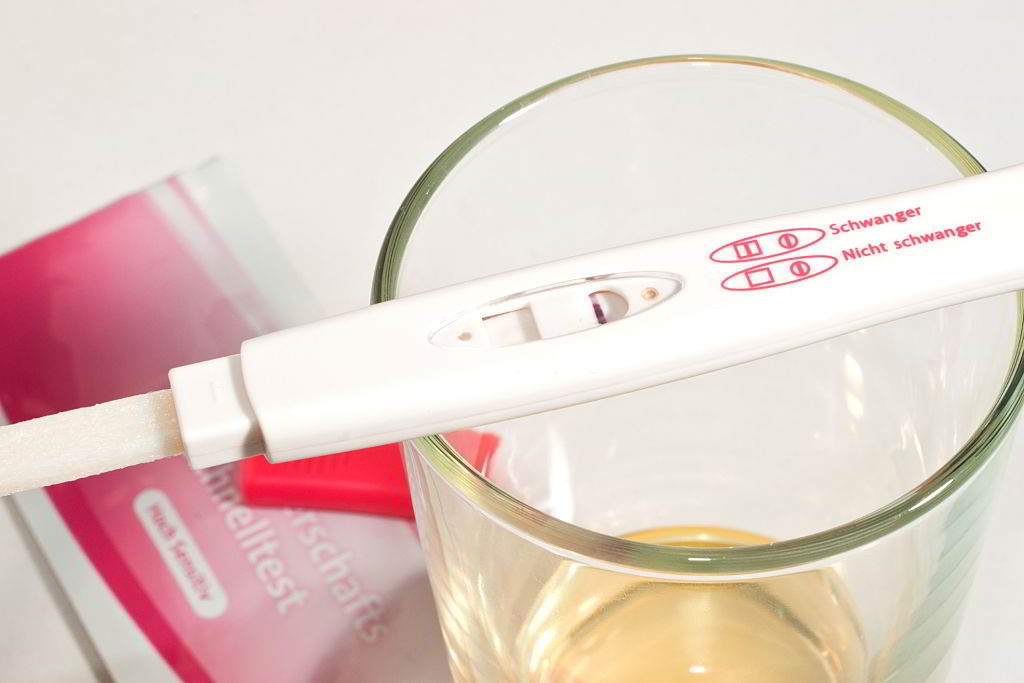
Human chorionic gonadotropin, commonly called hCG, is a hormone produced during pregnancy. It is the hormone detected by home pregnancy tests and laboratory blood tests.
At five weeks, hCG levels can vary widely between pregnancies. A result that is lower or higher than someone else’s does not automatically indicate a problem.
The most useful interpretation depends on:
- How the pregnancy was dated
- Whether ovulation occurred earlier or later than expected
- The exact laboratory reference range
- Whether the result is rising, falling, or remaining similar
- Symptoms such as pain or bleeding
- Ultrasound findings
- Previous pregnancy and fertility-treatment history
A single hCG result cannot by itself confirm where a pregnancy is located or whether it is developing normally. Healthcare professionals may use repeat blood tests and ultrasound when more information is needed.
Medical notice: This article provides general educational information. It does not replace advice from an obstetrician-gynecologist, midwife, fertility specialist, or another qualified healthcare professional. Contact your healthcare provider for interpretation of your individual results.
What Is hCG?
hCG is produced by tissue that develops into part of the placenta. Production begins after a fertilized egg attaches to the lining of the uterus.
During early pregnancy, hCG supports hormone production that helps maintain the uterine lining. Its concentration normally rises quickly during the first trimester before reaching a peak and later declining.
hCG can be detected in:
- Urine
- Blood
Urine pregnancy tests usually report a positive or negative result. A quantitative blood test provides a specific numerical measurement.
What Is the hCG Range at 5 Weeks?
MedlinePlus provides an example reference range of:
| Gestational age | Example hCG range |
|---|---|
| 4 weeks | 10–708 mIU/mL |
| 5 weeks | 217–8,245 mIU/mL |
| 6 weeks | 152–32,177 mIU/mL |
These ranges overlap considerably. A five-week result can therefore be lower than some four-week results or higher than some six-week results without the number alone determining the outcome.
Reference ranges also vary between laboratories. Always compare your result with the range printed on the laboratory report and ask the clinician who ordered the test to interpret it in context.
Why Is the Range So Wide?
Pregnancy dating is usually counted from the first day of the last menstrual period rather than from the actual day of conception.
This method assumes a typical cycle and ovulation time, but real cycles vary. Someone described as five weeks pregnant may have ovulated earlier or later than expected.
Differences can also result from:
- Cycle length
- Implantation timing
- Uncertain last-period dates
- Recent hormonal contraception
- Irregular periods
- Breastfeeding
- Fertility treatment
- Natural biological variation
- Differences between laboratories and testing methods
For this reason, an hCG number should not be used as a precise calculator of conception date or gestational age.
How Are hCG Levels Measured?
Home urine pregnancy test
A home pregnancy test checks whether hCG is present in urine.
Most home tests do not tell you the numerical level. A darker test line also does not provide a reliable measurement of how much hCG is present.
Urine-test accuracy can be affected by:
- Testing too early
- Diluted urine
- An expired test
- Incorrect timing
- Not following the product instructions
- Misreading an evaporation line
MedlinePlus recommends checking the expiration date, following the exact instructions, using a timer, and considering first-morning urine when testing early.
Qualitative blood test
A qualitative blood test reports whether hCG is detected. Like a urine test, it usually gives a positive or negative answer rather than a specific measurement.
Quantitative blood test
A quantitative blood test measures the specific amount of hCG in a blood sample. Results are generally reported in milli-international units per milliliter, written as mIU/mL.
A healthcare professional may order this test when:
- Pregnancy is very early
- Dates are uncertain
- There is pain or bleeding
- An ectopic pregnancy is being considered
- There is concern about an early pregnancy loss
- Fertility treatment was used
- A pregnancy needs closer monitoring
Quantitative testing is not required for every uncomplicated pregnancy.
Can You Measure hCG at Home?
A standard home pregnancy test cannot provide an accurate numerical hCG level.
Products that estimate broad ranges or weeks are not equivalent to a quantitative laboratory blood test. Their displays should not be used to diagnose pregnancy viability, locate a pregnancy, or decide whether medical care is necessary.
To obtain a numerical measurement, a healthcare professional must order a quantitative blood test.
Do not attempt to estimate your hCG level by:
- Comparing the darkness of test lines
- Repeatedly testing several times per day
- Comparing different test brands
- Diluting urine
- Opening a digital test
- Comparing photographs online
Line darkness can change because of urine concentration, lighting, timing, test design, and manufacturing variation.
Does hCG Have to Double Every 48 Hours?
Not every healthy pregnancy follows a perfect doubling pattern.
hCG often rises quickly during early pregnancy, but the rate varies. The expected increase can also slow as the starting level becomes higher.
Healthcare professionals may repeat quantitative tests approximately 48 hours apart when they need to examine the pattern. Several measurements may be needed, particularly when an ultrasound is inconclusive.
A result that does not double exactly within 48 hours does not, by itself, confirm a miscarriage or ectopic pregnancy. Research has shown that some viable pregnancies increase more slowly than the often-repeated doubling rule.
Interpretation should be left to a qualified healthcare professional who can consider:
- The starting hCG level
- The time between tests
- Symptoms
- Ultrasound findings
- Pregnancy dating
- Medical history
What Can One hCG Result Tell You?
A single quantitative result can show how much hCG was present at the time the blood sample was collected.
It cannot reliably determine:
- Whether the pregnancy is inside the uterus
- Whether the pregnancy will continue
- Whether an embryo has a heartbeat
- The exact day of conception
- Whether the pregnancy involves twins
- Whether a miscarriage will occur
- Whether the pregnancy is ectopic
A single value may help determine the next step, but serial tests and ultrasound may be needed before a diagnosis can be made.
What Does a Low hCG Level Mean at 5 Weeks?
A result below an expected reference range does not automatically mean the pregnancy is unhealthy.
Possible explanations include:
- The pregnancy is earlier than estimated
- Ovulation occurred later
- Implantation occurred later
- The last-period date was uncertain
- The laboratory uses a different reference range
- The pregnancy is not developing as expected
- An early pregnancy loss is occurring
- The pregnancy is ectopic
The number alone cannot identify which explanation applies.
ACOG notes that a low or decreasing hCG level can be associated with pregnancy loss, but several hCG tests and ultrasound examinations may be needed before a loss is confirmed.
Do not diagnose a miscarriage from one blood result or an online range.
What Does a High hCG Level Mean at 5 Weeks?
A result above an expected range does not automatically indicate a complication.
Possible explanations include:
- The pregnancy is farther along than estimated
- Ovulation occurred earlier
- The pregnancy involves more than one fetus
- Normal individual variation
- A laboratory or dating difference
- A molar pregnancy or another less common condition
A high number does not confirm twins. Only an appropriate ultrasound can determine how many pregnancies are developing.
MedlinePlus lists multiple pregnancy and molar pregnancy among possible explanations for higher-than-expected levels, but interpretation must consider dates, symptoms, repeat results, and imaging.
Can hCG Confirm a Healthy Pregnancy?
hCG can provide useful information, but it cannot provide complete confirmation on its own.
A pregnancy may have an hCG result within an expected range and still require further evaluation. A pregnancy may also have a result outside a published range and continue normally.
Healthcare professionals may combine:
- Medical history
- Menstrual and ovulation dates
- Quantitative hCG measurements
- Symptoms
- Physical examination
- Ultrasound findings
No single test should be interpreted separately from the complete clinical picture.
What Might an Ultrasound Show at 5 Weeks?
Ultrasound findings depend on the true gestational age, the type of ultrasound, the equipment, and individual development.
At around five weeks, it may be too early to see all expected structures. An inconclusive early scan does not necessarily mean that something is wrong.
A healthcare professional may recommend waiting and repeating the scan rather than drawing a conclusion from one early examination.
Do not use a specific hCG threshold as a guarantee that a gestational sac, embryo, or heartbeat must be visible. ACOG advises that serial hCG measurements and ultrasound may be required when the location or viability of a pregnancy is uncertain.
What Is a Pregnancy of Unknown Location?
A pregnancy of unknown location means that a pregnancy test is positive, but an ultrasound has not yet identified a pregnancy inside or outside the uterus.
This may happen because:
- The pregnancy is too early to see
- A miscarriage has occurred
- An ectopic pregnancy is present
- Dates are incorrect
It is not a final diagnosis.
The healthcare team may use repeat hCG measurements, additional ultrasound examinations, symptoms, and medical history to determine what is happening.
Follow-up is important because an ectopic pregnancy may not be visible on the first scan.
Does hCG Tell You Whether You Are Having Twins?
A twin or multiple pregnancy may produce a higher hCG result, but there is substantial overlap between singleton and multiple pregnancies.
Some singleton pregnancies have high results, while some twin pregnancies have levels within ordinary singleton ranges.
An hCG value cannot confirm:
- Twins
- Triplets
- How many embryos implanted
- Whether each pregnancy is developing normally
Ultrasound is the appropriate method for determining the number and location of developing pregnancies.
What If the hCG Level Falls?
Falling hCG during early pregnancy can indicate that a pregnancy is not continuing.
However, healthcare professionals may need additional testing to determine:
- Whether an early pregnancy loss has occurred
- Whether pregnancy tissue remains
- Whether the pregnancy could be ectopic
- Whether hCG is declining appropriately after treatment
- Whether another explanation is possible
Do not stop medical follow-up simply because the number begins falling. In an ectopic pregnancy, hCG can rise, fall, or remain relatively stable, so the pattern alone may not identify the location.
What If You Used Fertility Medicine?
Some fertility treatments contain hCG. Testing too soon after an hCG trigger injection may produce a positive result caused partly by the medication.
Follow the testing schedule provided by the fertility clinic.
Tell the clinic:
- Which medication was used
- When it was taken
- The dose prescribed
- The date of insemination or embryo transfer
- The home-test results
- Any pain or bleeding
Do not use general online ranges to interpret hCG after fertility treatment. Clinics may follow specific testing schedules based on the treatment and dates involved.
When Should You Contact Your Healthcare Provider?
Contact your prenatal or fertility healthcare professional when:
- You received a quantitative hCG result and do not understand it
- Repeat results are rising slowly, falling, or remaining similar
- You have vaginal bleeding
- You have pelvic or abdominal pain
- Your dates are uncertain
- You had fertility treatment
- You previously had an ectopic pregnancy
- You have had repeated pregnancy losses
- An ultrasound was inconclusive
- Pregnancy symptoms suddenly change and you are concerned
A healthcare professional can determine whether repeat blood testing, ultrasound, or another assessment is appropriate.
When to Seek Urgent Medical Care
Seek urgent medical attention when early pregnancy is accompanied by:
- Severe or worsening abdominal or pelvic pain
- Pain mainly on one side
- Shoulder pain
- Dizziness or fainting
- Heavy bleeding
- Significant weakness
- Trouble breathing
- Blue, gray, or unusually pale coloring
- Collapse or loss of consciousness
These may be warning signs of an ectopic pregnancy or internal bleeding. Ectopic pregnancy can become a medical emergency and cannot be ruled out by one hCG result.
Frequently Asked Questions
What should hCG be at exactly 5 weeks?
There is no single required number. MedlinePlus gives an example five-week range of 217–8,245 mIU/mL, but laboratories use different reference ranges and pregnancy dating may be uncertain.
Is an hCG level of 100 too low at 5 weeks?
One result cannot provide a diagnosis. The pregnancy may be earlier than estimated, or the value may require follow-up. Contact the clinician who ordered the test rather than comparing the number with an online chart.
Is a high hCG level a sign of twins?
Not necessarily. Multiple pregnancy is one possible explanation for a higher result, but singleton and twin ranges overlap. Ultrasound is needed to determine the number of pregnancies.
Should hCG double every two days?
Not always. Healthy pregnancies do not all follow an exact 48-hour doubling pattern. Clinicians interpret the rate in relation to the starting value, timing, symptoms, and ultrasound findings.
Can a low hCG level increase normally?
Yes. A lower starting result may rise appropriately. What matters clinically is often the pattern over time rather than comparison with one average value.
Can hCG rise during an ectopic pregnancy?
Yes. An ectopic pregnancy can produce rising, falling, or plateauing hCG. The level alone cannot confirm where the pregnancy is located.
Can a home test show my exact hCG level?
No. Most home tests report only whether hCG was detected. A quantitative blood test is needed for a numerical result.
Does a dark test line mean hCG is high?
Not reliably. Test-line darkness is affected by the brand, urine concentration, timing, and test design. It should not be used as a substitute for a blood test.
Can hCG confirm a heartbeat?
No. hCG cannot confirm a heartbeat. Ultrasound findings must be interpreted according to gestational age and the complete clinical situation.
When should hCG testing stop?
Many routine pregnancies do not require repeated hCG testing. The healthcare professional will decide when further tests are no longer necessary based on symptoms, results, ultrasound findings, and the reason testing began.
The Bottom Line
hCG levels at five weeks vary widely.
An example reference range is 217–8,245 mIU/mL, but the exact number is less important than the full clinical context. Laboratory ranges, ovulation timing, pregnancy dating, symptoms, repeat measurements, and ultrasound findings all affect interpretation.
Remember:
- One result cannot confirm pregnancy location or viability.
- hCG does not have to double perfectly every 48 hours.
- Low and high results have several possible explanations.
- Home tests do not accurately measure the numerical level.
- Repeat testing should follow a healthcare professional’s instructions.
- Pain, heavy bleeding, dizziness, or fainting requires prompt medical assessment.
Sources
- MedlinePlus: Quantitative hCG Blood Test and Reference Ranges
- MedlinePlus: Pregnancy Tests and hCG
- American College of Obstetricians and Gynecologists: Early Pregnancy Loss
- American College of Obstetricians and Gynecologists: Ectopic Pregnancy
- NHS: hCG Blood Tests and Ectopic Pregnancy Diagnosis
- Northern Care Alliance NHS: hCG Monitoring in Early Pregnancy


I want to conceive with baby boy…any tips for baby boy naturally
You can refer more here
https://www.huggies.com.au/conception/getting-pregnant/pregnancy-how-to/conceive-a-boy
<1.20 mean pregnant or non pregnant?
It depends on the time you check. You can based on my hcg levels chart that finding answers
Very nice write-up. I definitely appreciate this website. Keep it up!