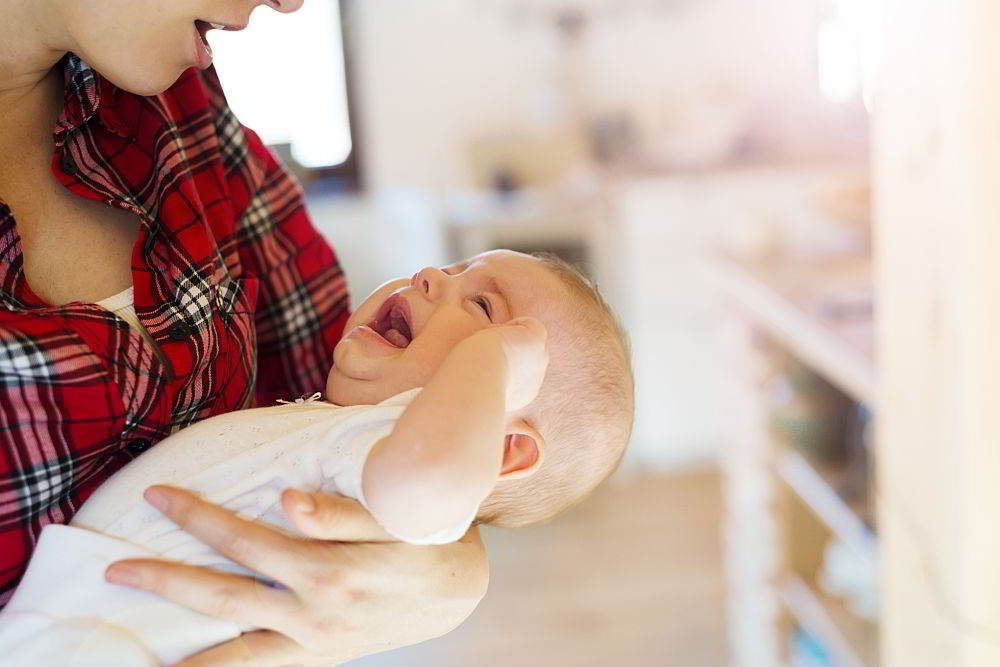
Your baby is yawning, rubbing their eyes, and clearly tired. You begin the usual sleep routine—and suddenly they seem determined to stay awake.
They may cry, arch, kick, turn away, become unusually active, or wake as soon as you put them down.
This is often described as “fighting sleep.”
Sleep resistance does not necessarily mean that anything is wrong. Babies have changing sleep needs, and settling can become temporarily harder because of timing, hunger, stimulation, developmental changes, separation anxiety, illness, or discomfort.
Rather than assuming your baby simply refuses to sleep, look at the complete picture: age, feeding, naps, awake time, behavior, and health.
Medical notice: This article provides general educational information. Babies who were born prematurely or have feeding, growth, breathing, neurological, or other medical concerns may need individualized advice from their pediatrician.
Table of Contents
What Does Fighting Sleep Look Like?
A baby who is resisting sleep may:
- Cry when the bedtime routine begins
- Become active after appearing tired
- Arch or stiffen while being held
- Turn away from feeding or rocking
- Kick or wave their arms
- Rub their eyes but remain awake
- Settle in your arms but wake when put down
- Repeatedly roll or change position
- Take a very long time to fall asleep
- Fall asleep briefly and wake again
- Refuse a nap that usually happens easily
These behaviors do not identify one particular cause.
The first step is to consider what your baby may need at that moment.
Why Do Babies Fight Sleep?
There are several common possibilities.
1. Your Baby May Not Be Tired Enough Yet
Sometimes the simplest explanation is that sleep is being offered before your baby is ready.
Sleep needs change quickly during infancy. A schedule that worked a few weeks ago may suddenly stop working.
Your baby may not be tired enough when they:
- Remain cheerful in the crib
- Continue playing
- Babble or look around
- Resist the routine without appearing distressed
- Regularly take a long time to fall asleep
- Take only a very short nap after finally settling
This may happen during a nap transition when an older baby begins needing fewer daytime naps.
What may help
When this happens consistently, try shifting the sleep opportunity slightly later rather than making a large schedule change at once.
Watch your baby’s behavior in addition to the clock.
A wake-window chart can be useful for rough planning, but it should not be treated as an exact timer that applies to every baby.
2. Your Baby May Be Very Tired
A baby can also have difficulty settling after remaining awake longer than they comfortably manage.
Possible signs include:
- Eye rubbing
- Yawning
- Looking away from activity
- Becoming increasingly fussy
- Crying intensely
- Becoming unusually active
- Difficulty calming
- Falling asleep and waking again quickly
Not every episode of crying means your baby is overtired, though. Hunger, illness, discomfort, or simply not being ready for sleep can look similar.
What may help
Start winding down when you notice your baby’s usual early tired cues.
A simple routine might include:
- Finishing active play
- Changing the diaper
- Dimming the lights
- Putting on sleep clothing
- Reading a short book
- Singing quietly
- Offering a cuddle
- Placing the baby in their safe sleep space
The routine does not need to be long.
3. Your Baby May Be Hungry
Young babies wake frequently because they need to eat.
A baby who is hungry may:
- Root or turn toward the breast or bottle
- Put hands toward the mouth
- Make sucking motions
- Become increasingly restless
- Cry
- Settle temporarily when held but wake again soon
For most healthy babies, feeding should respond to hunger cues rather than being withheld to maintain a sleep schedule.
Newborns and babies with growth concerns may need scheduled feeds according to pediatric guidance.
Do not reduce feeds to improve sleep
Trying to make a young baby sleep longer by delaying necessary feeds is not appropriate.
Likewise, do not automatically wake or stop waking your baby based on a generic online schedule.
Feeding needs depend on:
- Age
- Weight gain
- Prematurity
- Breastfeeding or formula feeding
- Daytime intake
- Medical history
- Your pediatrician’s recommendations
When you are unsure whether your baby still needs nighttime feeds, ask the pediatrician.
4. Your Baby May Be Overstimulated
An exciting environment can make winding down difficult.
Possible sources of stimulation include:
- Bright lights
- Loud television
- Active games
- Lots of visitors
- Screens
- Loud toys
- Frequent changes in activity
- A busy outing shortly before bed
An older baby who is interested in everything around them may appear tired but keep turning toward sounds, lights, or activity.
What may help
Make the period before sleep calmer.
Try:
- Dimming lights
- Reducing active play
- Turning off television or screens
- Speaking quietly
- Moving to a calmer room
- Repeating the same short bedtime routine
There is no need to keep the entire house completely silent. Ordinary household noise is generally fine.
5. Separation Anxiety May Be Affecting Sleep
During the second half of the first year, many babies become more aware that a caregiver can leave.
This normal developmental stage is called separation anxiety.
A baby who previously went to sleep easily may suddenly:
- Cry when you move away
- Reach for you
- Wake and look for you
- Protest when placed in the crib
- Want a particular caregiver
- Wake more frequently at night
Separation anxiety does not mean that you have made your baby too dependent by comforting them.
What may help
Keep your response calm and predictable.
You can:
- Use the same bedtime routine
- Offer reassurance
- Speak softly
- Keep nighttime interactions calm
- Practise brief, predictable separations during the day
- Respond when your baby needs you
A baby may need more reassurance during this stage.
6. Your Baby May Be Going Through a Developmental Change
Sleep can become temporarily less predictable while babies are learning new skills.
Examples include:
- Rolling
- Sitting
- Crawling
- Pulling to stand
- Babbling
- Increased social awareness
A baby may practise these skills in the crib instead of immediately falling asleep.
You may see them:
- Rolling repeatedly
- Getting onto hands and knees
- Sitting up
- Moving around the crib
- Babbling
- Reaching for the crib rails
What may help
Give your baby plenty of supervised opportunities to practise new physical skills while awake.
At sleep time:
- Keep the routine familiar
- Allow some time to settle
- Keep the crib bare
- Avoid physically restraining normal movement
- Make gradual schedule adjustments only when needed
Developmental sleep changes often pass as the new skill becomes familiar.
7. Something May Be Uncomfortable
A baby may resist sleep because they do not feel well.
Possible causes include:
- A wet or dirty diaper
- Nasal congestion
- Teething discomfort
- Reflux symptoms
- Fever or illness
- Ear discomfort
- Constipation
- Being too warm
- Being too cold
- Skin irritation
- Hunger
A sudden change in sleep deserves more attention when your baby also seems different while awake.
Contact the pediatrician when sleep resistance occurs with:
- Fever
- Poor feeding
- Repeated vomiting
- Persistent coughing
- Breathing difficulty
- Fewer wet diapers
- Persistent crying
- Apparent pain
- Unusual sleepiness
- Difficulty waking
- A major behavior change
Does Teething Make Babies Fight Sleep?
Teething discomfort can temporarily interfere with settling.
Possible teething signs include:
- Drooling
- Chewing more than usual
- Sensitive gums
- Mild irritability
- A tooth becoming visible
Teething should not automatically be blamed for significant illness.
High fever, severe diarrhea, repeated vomiting, breathing difficulty, or extreme sleepiness should be assessed rather than dismissed as teething.
Ask your baby’s healthcare professional about appropriate pain relief.
Do not use:
- Teething necklaces
- Unapproved numbing products
- Alcohol on the gums
- Medicines intended for adults
Can Reflux Make a Baby Resist Sleep?
Some babies with reflux may become uncomfortable around feeding or lying down.
Possible signs include:
- Frequent spit-up
- Swallowing or gulping
- Coughing
- Fussiness after feeding
- Arching
- Waking soon after being placed down
Occasional spit-up is common during infancy.
Contact your baby’s pediatrician when reflux-like symptoms involve:
- Poor weight gain
- Feeding refusal
- Frequent choking
- Breathing difficulties
- Blood in vomit
- Green vomit
- Repeated forceful vomiting
Do not incline the crib or place your baby on their stomach to treat reflux.
Babies should sleep on a firm, flat surface on their backs unless a qualified medical specialist has given specific instructions for a medical condition.
Why Does My Baby Fight Naps but Not Bedtime?
Daytime sleep can be more difficult because the environment is brighter and more active.
Your baby may also:
- Not be tired enough
- Be transitioning to fewer naps
- Become distracted by daytime activity
- Have had a long previous nap
- Need a different nap time as they grow
A short pre-nap routine can help.
For example:
- Diaper change
- Dim room
- Sleep sack
- Short book
- Song
- Crib
You do not need to reproduce the entire nighttime routine before every nap.
Why Does My Baby Fight Bedtime but Nap Well?
Possible explanations include:
- The final nap ended too late
- Bedtime is being offered too early
- The baby has been awake too long
- Evening activity is stimulating
- Separation anxiety is stronger at night
- The baby is hungry
- The baby’s schedule is changing
Look for patterns over several days rather than changing the entire schedule after one difficult evening.
Does Keeping a Baby Awake Longer Make Them Sleep Better?
Not necessarily.
Intentionally preventing a tired baby from sleeping does not guarantee longer nighttime sleep and may make settling more difficult.
Likewise, excessive daytime sleep can affect bedtime for some older babies.
The goal is balance rather than sleep deprivation.
Offer age-appropriate opportunities to nap and adjust the routine as your baby develops.
Should You Follow an Exact Bedtime?
A reasonably predictable bedtime can be useful, especially for older babies, but it does not need to happen at the exact same minute every night.
Bedtime may shift because:
- Morning waking changed
- Naps were unusually short
- A late nap was needed
- The baby was sick
- Travel disrupted the day
- Feeding took longer
- Your baby’s sleep needs are changing
Think of bedtime as a general range rather than a strict appointment.
How Much Sleep Does a Baby Need?
Sleep needs depend strongly on age.
For infants ages 4 to 12 months, general recommendations are approximately 12 to 16 total hours of sleep in 24 hours, including naps.
Newborn sleep is much less organized. Young babies may sleep in short periods throughout both day and night because they need frequent feeding.
Do not compare your baby’s exact sleep total with another baby of the same age.
Consider:
- Overall sleep
- Feeding
- Growth
- Alertness while awake
- Mood
- Development
- Your pediatrician’s assessment
How to Create a Calmer Bedtime Routine
A routine gives your baby familiar signals that sleep is coming.
Keep it simple
A routine may include:
- Bath or wash
- Fresh diaper
- Pajamas
- Feed
- Dim lights
- Short book
- Quiet song
- Cuddle
- Bed
You do not need every step.
Choose a routine that your family can realistically repeat.
Keep the final part calm
Avoid highly stimulating activity immediately before bed.
Quiet activities such as reading, singing, or cuddling may make the transition easier.
Follow your baby’s feeding needs
Do not delay a needed feed because it does not fit the bedtime schedule.
Young babies may naturally become sleepy while feeding.
Make gradual changes
When you think bedtime is too early or too late, shift it gradually and observe what happens for several days.
Avoid changing bedtime, nap times, feeding, and the sleep routine all at once.
Is It Okay to Rock or Hold Your Baby to Sleep?
Yes. Holding and rocking are normal ways to comfort a baby.
Some families eventually choose to help an older infant become familiar with falling asleep in the crib, but independent settling is not something every baby must achieve at the same age.
You may try placing an older baby down calm and sleepy.
When they become upset, offer reassurance.
The most important issue is that once your baby is sleeping, they should be on a safe infant sleep surface.
What If My Baby Falls Asleep Only in My Arms?
This is particularly common in young babies.
They may wake when transferred because:
- Your body is warm
- They notice the change in position
- They are moving into lighter sleep
- They want closeness
- The mattress feels different
You can try:
- Keeping the routine consistent
- Lowering the baby slowly
- Placing the feet and body down gently
- Keeping a hand on the baby’s chest briefly after transfer
- Trying again when everyone is calm
Never fall asleep holding a baby on a couch, recliner, or armchair.
When you are becoming sleepy, put the baby in their own safe sleep space.
Should You Let a Baby Cry Until They Fall Asleep?
There is no single sleep approach required for every family.
A baby’s age, temperament, feeding needs, health, and development matter.
Young babies need responsive care and frequent feeding.
For an older healthy infant, families who are considering a structured sleep approach can discuss age-appropriate options with their pediatrician.
Regardless of the approach:
- Respond to illness
- Respond to breathing problems
- Feed when medically needed
- Change a dirty diaper
- Check persistent or unusual crying
- Do not leave a baby in an unsafe sleep environment
Sleep training should never replace medical evaluation for a baby who seems unwell.
What If My Baby Wakes Every Time I Put Them Down?
First check whether your baby needs:
- Feeding
- Burping
- A diaper change
- Comfort
- Relief from congestion
- Medical attention
When your baby appears well, repeated waking may simply reflect normal infant sleep.
Try:
- A calm routine
- A comfortable room
- Gentle transfer
- Allowing a brief pause when the baby only stirs
- Reassuring the baby when they fully wake
Do not use pillows, positioners, wedges, or inclined surfaces to keep the baby asleep.
Safe Sleep Still Matters When Your Baby Fights Sleep
Exhausted caregivers may be tempted to use whatever location finally gets the baby to sleep.
However, sleep resistance does not make unsafe sleep spaces safer.
For every nap and nighttime sleep:
- Place your baby on their back
- Use a firm, flat, level sleep surface
- Use a safety-approved crib, bassinet, portable crib, or play yard
- Use only a fitted sheet
- Keep the sleep space clear
- Keep the baby’s face and head uncovered
Do not place these items in an infant’s sleep space:
- Pillows
- Loose blankets
- Stuffed animals
- Crib bumpers
- Sleep positioners
- Wedges
- Nursing pillows
- Baby loungers
- Weighted blankets
- Weighted sleep sacks
What If My Baby Rolls While Fighting Sleep?
Always place your baby on their back to begin every sleep.
When your baby can comfortably roll from back to stomach and stomach to back independently, you generally do not need to repeatedly reposition them after they roll themselves.
Keep the crib completely clear so they can move freely.
Stop swaddling as soon as your baby begins trying to roll.
Do not use a device to hold your baby in one position.
Can My Baby Sleep in a Swing if That Is the Only Place They Settle?
A swing is not intended to be a routine infant sleep surface.
The same applies to:
- Bouncers
- Loungers
- Nursing pillows
- Strollers
- Car seats outside travel
When your baby falls asleep in a sitting device, move them to an appropriate firm, flat sleep surface as soon as reasonably possible.
Car seats should be used according to their instructions during travel.
Is White Noise Helpful?
Some babies settle more easily with steady background noise.
When using a sound machine:
- Keep it outside the crib
- Keep cords completely out of reach
- Do not place it next to the baby’s head
- Use a moderate volume
White noise is optional. It does not need to become part of every baby’s routine.
Why Is My Baby Suddenly Fighting Sleep After Sleeping Well?
A sudden change can happen because of:
- A nap transition
- Developmental skills
- Separation anxiety
- Teething
- Illness
- Travel
- Schedule changes
- Hunger
- Increased awareness of surroundings
Sometimes there is no obvious explanation.
Return to your familiar routine and watch how the pattern develops.
Contact your pediatrician when the change is dramatic, persistent, or accompanied by health concerns.
When Should You Contact the Pediatrician?
Talk with your baby’s healthcare professional when sleep resistance occurs with:
- Poor feeding
- Poor weight gain
- Frequent vomiting
- Persistent coughing
- Loud regular snoring
- Repeated breathing pauses
- Wheezing
- Apparent pain
- Fever
- Fewer wet diapers
- Unusual sleepiness
- Difficulty waking
- Repeated ear pulling with illness symptoms
- Persistent inconsolable crying
- A major change in behavior
Also seek professional advice when sleep difficulties are causing severe caregiver exhaustion or making safe care difficult.
When Is Urgent Medical Care Needed?
Seek urgent or emergency medical help when your baby:
- Has significant difficulty breathing
- Has blue, gray, or unusually pale lips or skin
- Is very difficult or impossible to wake
- Becomes limp or poorly responsive
- Has a prolonged breathing pause
- Has a seizure
- Cannot feed because of breathing difficulty
- Has severe choking
- Appears seriously unwell
A baby younger than 3 months with a temperature of 38°C (100.4°F) or higher needs prompt medical assessment.
Frequently Asked Questions
Why does my baby fight sleep even when obviously tired?
Your baby may have stayed awake beyond their comfortable point, be overstimulated, hungry, uncomfortable, or going through a developmental change.
Tired behavior alone cannot identify the exact reason.
Why does my baby suddenly get energetic at bedtime?
Some babies become very active when settling is difficult. It may happen when they are very tired, not tired enough, overstimulated, or interested in practising a new skill.
Do babies fight sleep because they are scared of missing out?
Older babies can become increasingly interested in their surroundings and may resist leaving an enjoyable activity. Separation anxiety can also make bedtime harder.
Is fighting sleep a sign of a sleep regression?
“Sleep regression” is an informal term rather than a medical diagnosis. Developmental changes can temporarily disrupt sleep, but illness, hunger, discomfort, or schedule changes may produce similar behavior.
Should I keep my baby awake longer if they fight bedtime?
Not automatically. If bedtime consistently seems too early, a small adjustment may help. Deliberately keeping a clearly tired baby awake for a long time can make settling harder.
Should I shorten naps so my baby sleeps at night?
Do not routinely deprive a baby of needed daytime sleep. For an older baby, very late or unusually long naps may sometimes influence bedtime, but changes should be gradual.
Does feeding before bed help?
A hungry baby may have difficulty settling. Follow your baby’s feeding needs rather than using a rigid schedule.
Should I feed my baby every time they wake?
Not every waking is necessarily hunger. Feeding needs depend on age, growth, daytime intake, and health. Ask your pediatrician when you are considering reducing nighttime feeds.
Why does my baby wake immediately after I put them in the crib?
Babies can notice the transition from warm arms to a flat mattress or move into lighter sleep. This is common, particularly in young babies.
Is it bad to rock my baby to sleep?
No. Rocking is a normal form of comfort. Once asleep, place your baby on an appropriate safe sleep surface.
Why does my baby cry when I leave the room?
Separation anxiety commonly develops during the second half of the first year. A consistent routine and calm reassurance may help.
Should I use a sleep positioner to stop my baby moving?
No. Do not use wedges, positioners, pillows, or rolled blankets to restrain an infant during sleep.
When will my baby stop fighting sleep?
There is no exact age. Sleep changes throughout infancy and early childhood. A difficult period may improve as feeding, naps, development, and routines change.
The Bottom Line
Babies fight sleep for many reasons, and the solution depends on what is actually happening.
Common possibilities include:
- Being offered sleep too early
- Becoming very tired
- Hunger
- Overstimulation
- Separation anxiety
- Developmental changes
- Illness or physical discomfort
To make settling easier:
- Watch your baby’s tired and hunger cues
- Use a simple, predictable routine
- Keep the period before sleep calm
- Protect necessary feeds
- Adjust schedules gradually
- Expect sleep needs to change
- Offer reassurance during separation anxiety
- Check for illness or discomfort when sleep changes suddenly
Most importantly, keep sleep safe even during difficult nights: place your baby on their back on a firm, flat, clear infant sleep surface and avoid pillows, loose bedding, positioners, weighted products, and inclined sleepers.
Sources
- American Academy of Pediatrics: Getting Your Baby to Sleep
- American Academy of Pediatrics: Separation Anxiety and Sleeping Trouble
- American Academy of Pediatrics: How Often and How Much Should Your Baby Eat?
- American Academy of Pediatrics: Safe Sleep Tips for Sleep-Deprived Parents
- NHS: Helping Your Baby to Sleep
- NHS: Your Baby’s Sleep Patterns
- American Academy of Sleep Medicine: Child Sleep Duration Recommendations
- Centers for Disease Control and Prevention: Safe Sleep for Babies